Separatory funnels are essential laboratory glassware used for separating immiscible liquid phases, liquid-liquid extraction, and solvent-based separation processes. Choosing the right separatory funnel helps make the process more controlled, facilitates phase separation, and reduces the risk of sample loss.

What Should You Consider When Choosing a Separatory Funnel?
Separatory funnels are essential laboratory glassware used for separating immiscible liquid phases, liquid-liquid extraction, and solvent-based separation processes. Choosing the right separatory funnel helps make the process more controlled, facilitates phase separation, and reduces the risk of sample loss.
So, what should you consider when selecting a separatory funnel?
1. Choose the Right Capacity
The capacity of the separatory funnel should be selected according to the total volume of liquid to be used. It is important not to fill the funnel completely, as sufficient headspace is required for effective mixing during extraction.
Therefore, consider the total volume of the sample and extraction solvent, rather than the sample volume alone.
2. Funnel Shape: Pear-Shaped or Cylindrical?
Separatory funnels are available in different geometries. One of the most common designs is the pear-shaped separatory funnel.
Its shape allows the lower phase to collect in the narrow section, making the interface between the two liquid phases easier to observe and control. Cylindrical and other designs may also be preferred depending on the application and required volume.
3. Pay Attention to the Stopcock Type
The stopcock is one of the most important components of a separatory funnel.
Common options include glass stopcocks and PTFE stopcocks. PTFE stopcocks can offer convenient operation and are suitable for many laboratory applications.
Always evaluate the chemical compatibility of the stopcock material with the solvents and chemicals being used.
4. Stopper and Joint Design
A properly fitting upper stopper is particularly important when shaking the funnel.
Ground-glass stoppers and suitable synthetic alternatives are available. The stopper and joint should be correctly matched and checked before use.
5. Glass Quality and Chemical Resistance
Separatory funnels may come into contact with a wide range of solvents, acids, and chemical solutions. Chemical resistance is therefore an important selection criterion.
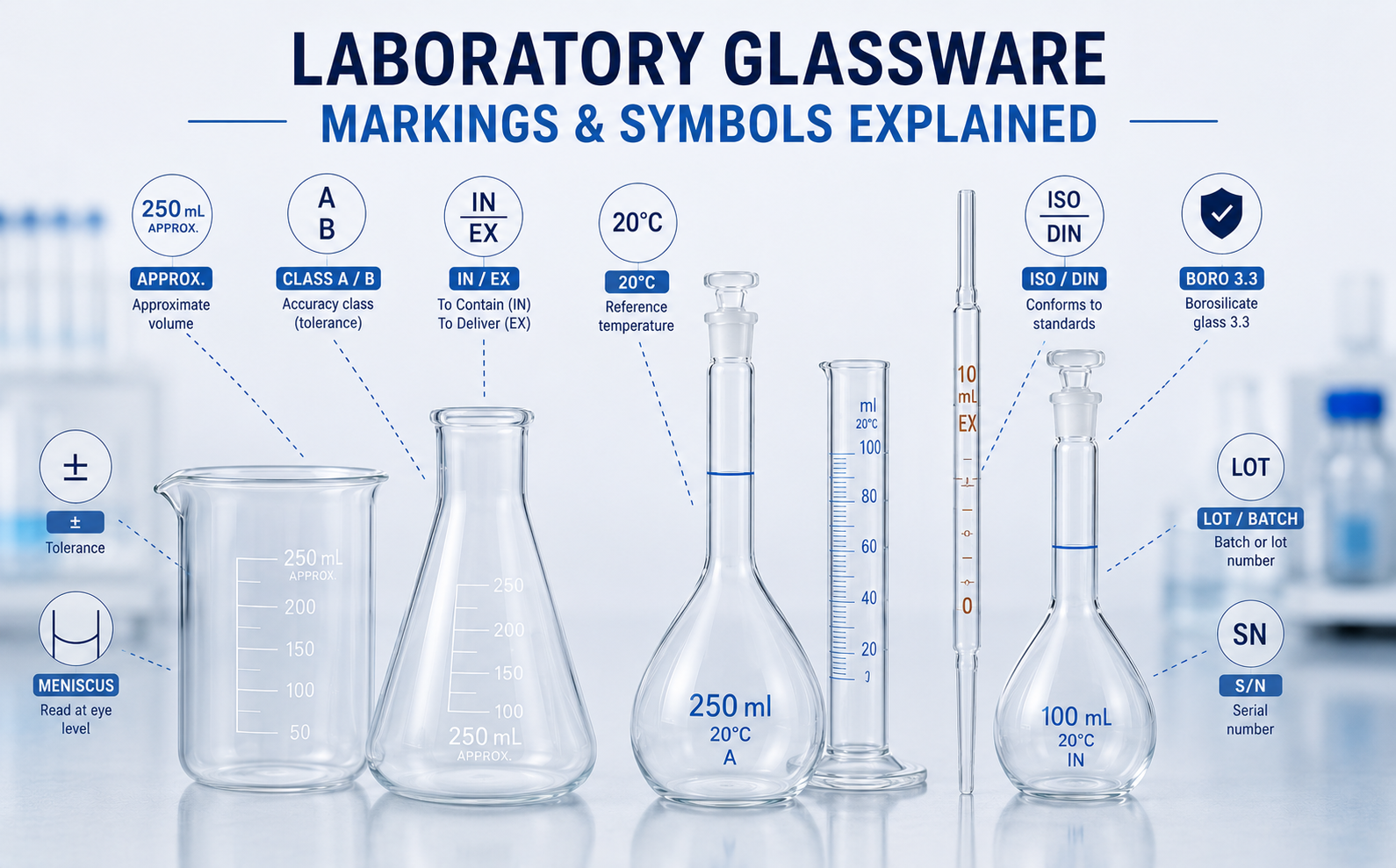
Borosilicate 3.3 glass is widely used in laboratories due to its low thermal expansion and high chemical resistance.
6. Clear Visibility of the Phases
During liquid-liquid extraction, the interface between the two phases should be clearly visible.
High-quality transparent glass makes it easier to observe the phase boundary, emulsion formation, and liquid level, which is especially important in precise extraction procedures.
7. Safe Operation
Shaking a separatory funnel can generate internal pressure, particularly when volatile solvents are used. The funnel should therefore be vented carefully during the procedure.
Always point the funnel in a safe direction and follow laboratory safety procedures appropriate for the chemicals being handled.
The Right Separatory Funnel = Better-Controlled Extraction
Capacity alone is not enough when choosing a separatory funnel. Volume, body geometry, stopcock type, stopper design, glass quality, chemical compatibility, and ease of use should all be considered together.
BOROX laboratory glassware offers different capacities and configurations designed to support reliable and controlled laboratory workflows.
BOROX® – Precision in Every Detail.