Titration is one of the most widely used techniques for concentration determination in analytical chemistry. Reliable results, however, depend not only on the solutions and analytical method but also on the burette itself.

Burette Selection Guide: What Should You Consider for Accurate Titration?
Titration is one of the most widely used techniques for concentration determination in analytical chemistry. Reliable results, however, depend not only on the solutions and analytical method but also on the burette itself.
Volume accuracy, tolerance, accuracy class, stopcock design and scale readability can all influence measurement reliability.
What Is a Burette?
A burette is a graduated laboratory instrument designed for the accurate and controlled delivery of liquids. During titration, it allows the titrant to be dispensed gradually while measuring the volume delivered.
Key Factors When Selecting a Burette
1. Select the appropriate volume.
Burettes are available in different nominal capacities, with 50 mL being one of the most common laboratory sizes. The appropriate capacity should be selected according to the expected titration volume.
2. Consider Class A and Class AS.
Class A burettes are designed for applications requiring high volumetric accuracy. Class AS volumetric glassware combines high accuracy with specifications intended for shorter delivery/waiting times. Always check the stated class and tolerance for precision work.
3. Check the tolerance.
Nominal capacity alone does not define measurement performance. The specified tolerance indicates the permitted deviation from the nominal volume. This should be considered when comparing burettes for quantitative analysis.
4. Look for a clearly readable scale.
Accurate initial and final readings are essential. Clear, durable graduations make meniscus reading easier and help reduce reading errors. The user's eye should remain level with the meniscus to minimize parallax error.
5. Choose the appropriate stopcock.
Glass and PTFE stopcocks offer different operating characteristics. PTFE stopcocks are widely used because of their smooth operation, controlled flow and practical maintenance characteristics. Chemical compatibility should always be considered.
6. Check standards and calibration information.
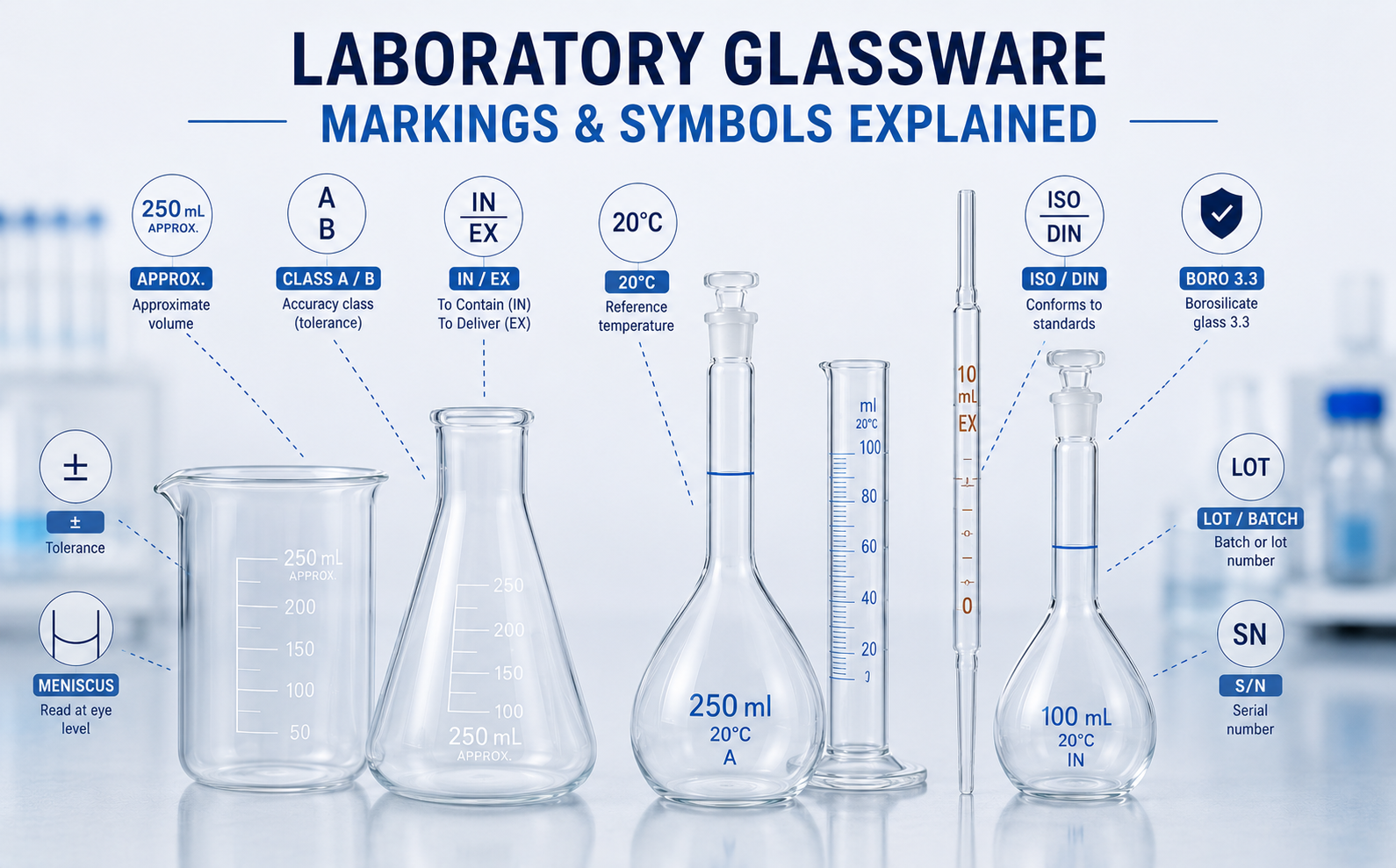
Nominal capacity, accuracy class, tolerance, reference temperature and applicable standard markings provide important information about the burette's intended performance. Documentation and traceability may also be important in analytical and quality-control laboratories.
7. Inspect before use.
Check the burette for cracks, contamination, leakage and proper stopcock operation. Air bubbles in the tip should be eliminated before starting a titration.
The Right Burette for More Reliable Titration
Reliable titration requires the correct combination of capacity, tolerance, accuracy class, readable graduations and controlled liquid delivery.
BOROX® burettes are designed to support different titration requirements, from routine laboratory work to precision analytical applications.
BOROX® — Precision in Every Detail.