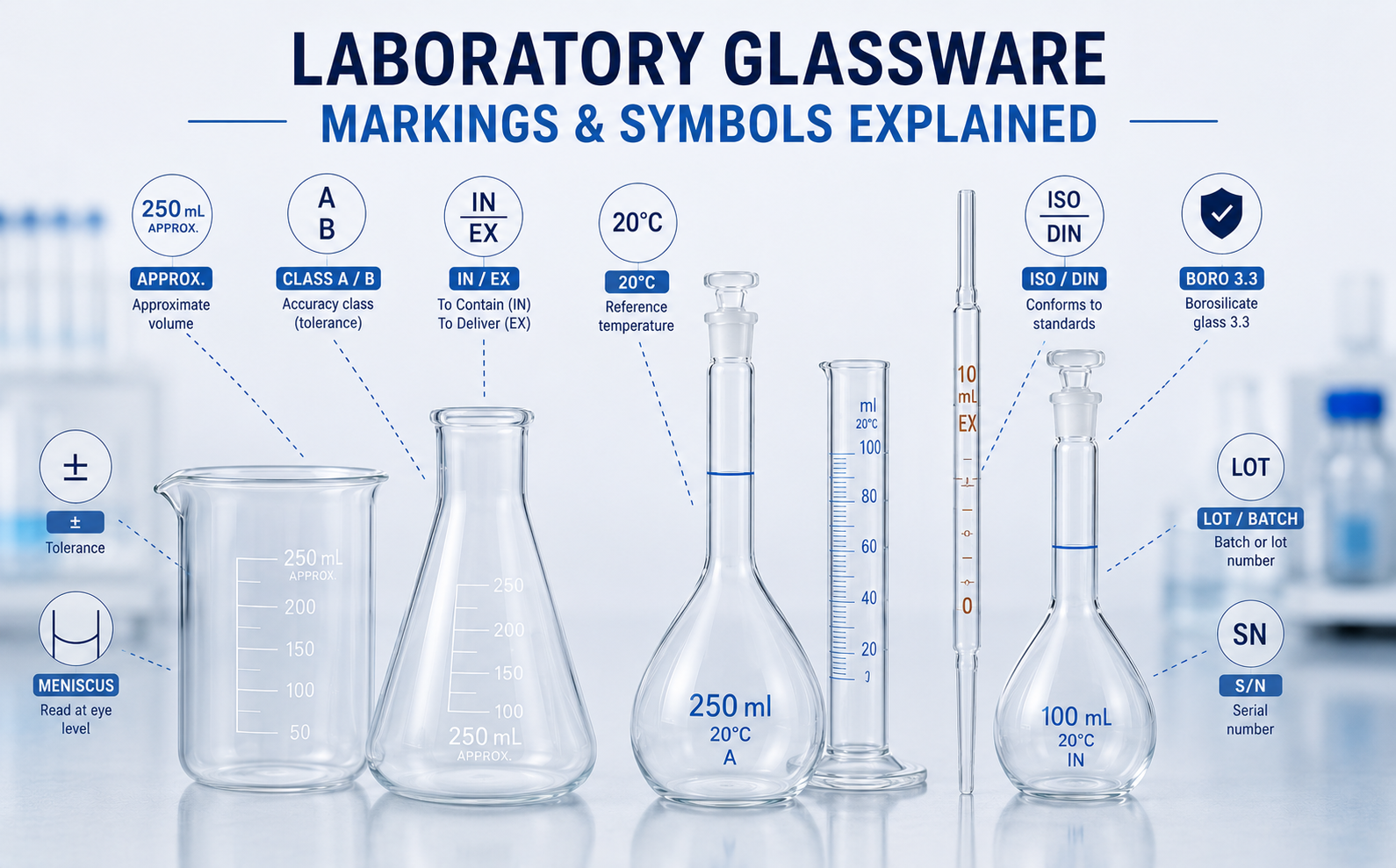
Laboratory containers, bottles, cylinders, pipettes and other equipment can be manufactured from a variety of materials. Glass and plastic are among the most common choices, but selecting between them involves much more than durability or cost. Chemical compatibility, operating temperature, measurement accuracy, sterilization requirements and contamination risk should all be considered.
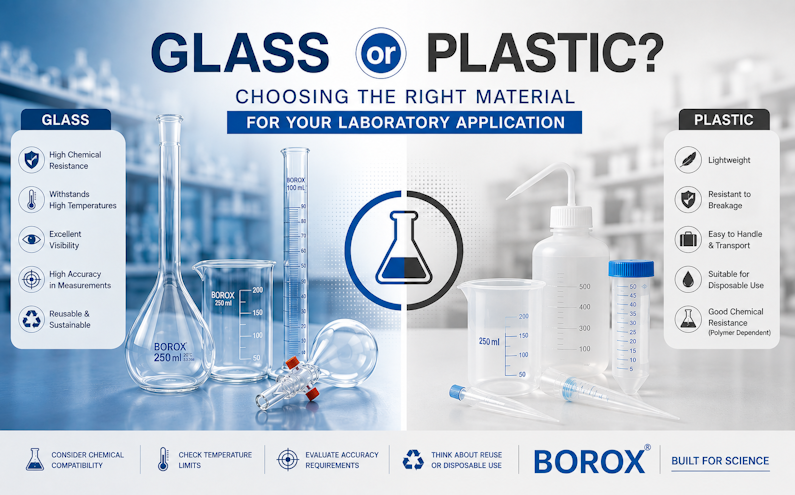
Glass or Plastic? Choosing the Right Material for Your Laboratory Application
Laboratory containers, bottles, cylinders, pipettes and other equipment can be manufactured from a variety of materials. Glass and plastic are among the most common choices, but selecting between them involves much more than durability or cost. Chemical compatibility, operating temperature, measurement accuracy, sterilization requirements and contamination risk should all be considered.
Advantages of Laboratory Glass
In laboratory glassware, borosilicate 3.3 glass is widely used because of its low thermal expansion and high chemical resistance.
Key advantages include:
- High chemical resistance
- Good resistance to elevated temperatures
- Excellent visibility of samples and liquids
- Reusability where appropriate
- Potential for high accuracy in volumetric applications
- Autoclavability of suitable products
These characteristics make glass an important choice for analytical work, solution preparation, titration, heating and precise volumetric measurements.
Advantages of Laboratory Plastics
Plastic laboratory products are valued for their low weight, resistance to breakage and versatility.
Different polymers such as PP, PE, HDPE, LDPE, PS and PTFE are used in laboratory products, each offering different chemical and physical properties.
Key advantages include:
- Lightweight construction
- Low risk of breakage
- Easy handling and storage
- Availability of disposable options
- High chemical resistance with certain polymers
- Wide variety of product designs
Plastic products are particularly practical for routine sample handling, storage, transfer and disposable applications.
Why Is Chemical Compatibility Important?
It is incorrect to assume that all plastics are chemically resistant or that glass is suitable for every chemical.
Certain organic solvents, for example, may affect specific polymers. Glass also has limitations and is generally unsuitable for chemicals such as hydrofluoric acid.
The correct question is therefore not simply “glass or plastic?” but rather “which type of glass or plastic is compatible with the chemical being used?”
Temperature and Sterilization
Suitable borosilicate glass can offer significant advantages in applications involving elevated temperatures. However, not every glass product should automatically be considered suitable for direct heating.
Temperature resistance among plastics varies significantly depending on the polymer. PP, for example, can withstand relatively high temperatures in many laboratory applications, while other plastics may have lower operating limits.
The same applies to autoclaving. Always check the manufacturer's specified conditions for the individual product.
What About Precise Volume Measurement?
For volumetric flasks, burettes and volumetric pipettes, factors such as calibration, tolerance class and applicable standards are critical.
High-quality laboratory glassware is widely used for these applications. However, glass alone does not guarantee accuracy. Specifications such as Class A, Class AS and compliance with relevant standards should also be considered.
Glass or Plastic?
There is no universal answer.
Glass can be an excellent choice where elevated temperatures, reusability, visibility and precise volumetric work are important.
Plastic can offer advantages where low weight, resistance to breakage, convenient handling and disposable use are priorities.
The right choice should always be based on the application, chemical compatibility, temperature, required accuracy and intended use.
Conclusion
Choosing the appropriate material can influence not only convenience but also measurement reliability, sample integrity and overall laboratory efficiency.
When selecting BOROX laboratory products, consider the material, operating temperature, chemical compatibility and technical specifications to ensure that the product is suitable for your application.