Simple routines that extend the service life of your flasks, bottles and volumetric ware.

Care and Cleaning of Laboratory Glassware
Simple routines that help extend the service life of flasks, bottles and volumetric glassware
Reliable laboratory glassware performance depends not only on the quality of the glass, but also on proper handling, cleaning, drying and storage.
Flasks, reagent bottles, volumetric flasks, pipettes, burettes and other glassware are regularly exposed to chemicals, temperature changes and repeated cleaning. Good maintenance routines help protect glass surfaces, preserve the readability of markings and extend product service life.
Clean Soon After Use
Whenever practical, laboratory glassware should be cleaned shortly after use. Allowing solutions or residues to dry on the glass surface can make subsequent cleaning more difficult, particularly in narrow-neck bottles and flasks.
The cleaning procedure should always be selected according to the product's intended use and the substances with which it has been in contact.
Choose the Appropriate Cleaning Method
Not every residue requires the same cleaning procedure.
For routine applications, water and a suitable laboratory detergent may be sufficient. More specific residues should be treated using a cleaning procedure compatible with the chemical involved and the laboratory's established protocols.
Abrasive materials should generally be avoided because they may scratch glass surfaces. Excessive mechanical rubbing should also be avoided around graduations, logos and other printed markings.
Use the Right Laboratory Brush
For bottles, flasks and other narrow-neck glassware, a properly sized laboratory brush can make cleaning considerably easier.
The brush should reach the required internal surfaces without requiring excessive force. Hard contact between metal components and the glass should be avoided to reduce the risk of scratching or damage.
The objective is effective but controlled mechanical cleaning.
Rinsing Is an Essential Part of Cleaning
After washing, detergent and other cleaning agents should be thoroughly removed.
Depending on the application, water of an appropriate quality may be used for the final rinse. In analytical work in particular, avoiding detergent or mineral residues on glass surfaces can be important for reliable results.
Glassware that appears visually clean may still contain invisible residues.
Take Extra Care with Volumetric Glassware
Volumetric flasks, pipettes and burettes are designed for measuring or delivering defined volumes.
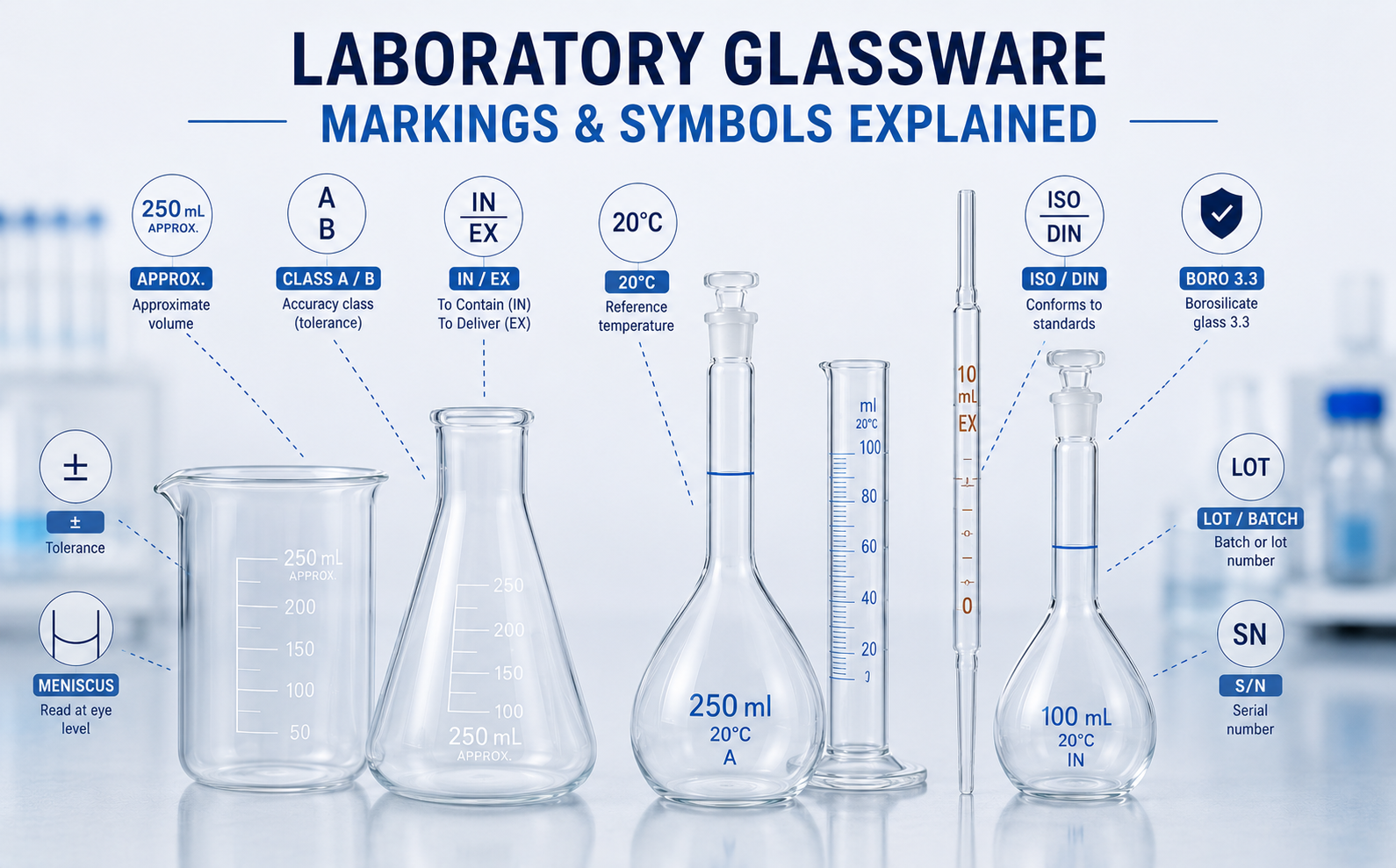
Unnecessary exposure to high temperatures and sudden temperature changes should be avoided. Calibrated volumetric glassware should be cleaned and handled according to the manufacturer's relevant instructions.
Proper care is important not only for product longevity but also for maintaining measurement performance.
Avoid Sudden Temperature Changes
Borosilicate 3.3 glass offers excellent properties for many laboratory applications, including good thermal resistance. However, this does not mean that glassware can withstand unlimited thermal shock.
Placing very hot glassware directly onto a cold surface or exposing it to abrupt temperature changes can create thermal stress.
Controlled heating and cooling are fundamental practices for safe, long-term glassware use.
Inspect Glassware Before Storage and Reuse
Cleaning is also a good opportunity to inspect the physical condition of glassware.
Cracks, chipped edges, deep scratches or other visible damage can present risks during subsequent use. Glassware intended for heating or applications involving vacuum or pressure should be carefully evaluated before use.
Damaged products should be removed from service according to the laboratory's safety procedures.
Dry and Store Correctly
Clean glassware should be properly dried and stored in an environment that protects it from contamination and mechanical damage.
Bottles and flasks should be arranged to minimize impacts, while delicate volumetric products should be stored to prevent falling or collision with other glassware.
Small Routines, Longer Service Life
Glassware maintenance does not need to be complicated.
Timely cleaning + appropriate cleaning methods + thorough rinsing + controlled temperatures + regular inspection + proper storage are fundamental steps that help maintain glassware performance and service life.
With appropriate care, BOROX® laboratory glassware supports a reliable and sustainable daily laboratory workflow.
Use it correctly.
Clean it properly.
Keep it performing longer.
BOROX® — Precision in Every Detail.