An educational laboratory allows students to transform theoretical knowledge into practical experience while developing scientific thinking and proper laboratory practices. Selecting suitable equipment is therefore important for safety, experimental accuracy, ease of use and long-term cost efficiency.

1. Essential Laboratory Glassware
Glassware forms the foundation of chemistry and general science laboratories. Common essentials include beakers, Erlenmeyer flasks, graduated cylinders, volumetric flasks, test tubes, pipettes, burettes, glass funnels, watch glasses and reagent bottles.
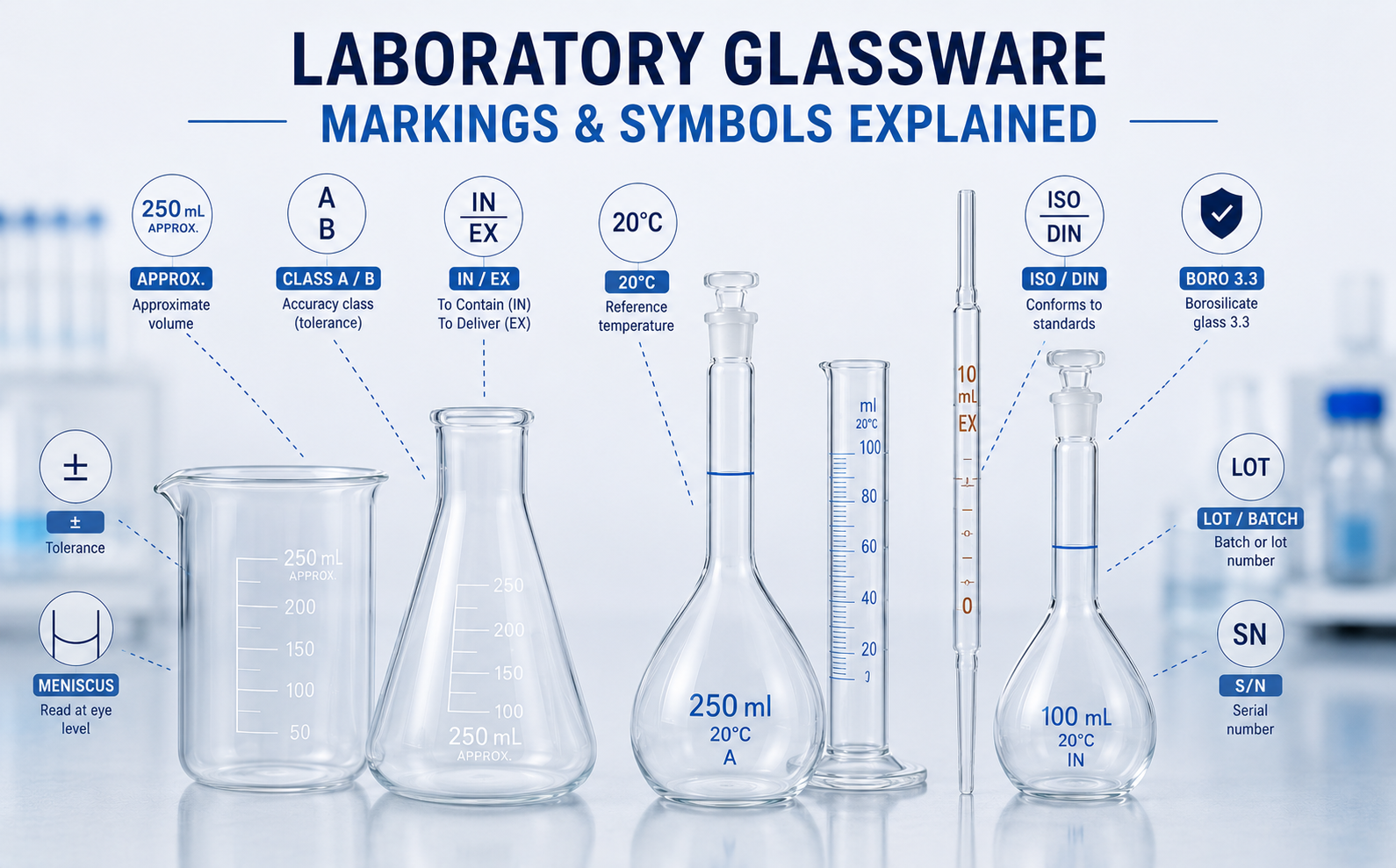
In educational environments where equipment is used frequently, glass quality, thermal resistance, chemical resistance and measurement tolerances should be considered. Borosilicate 3.3 glass is widely used for applications involving heating and chemical handling.
2. Volumetric Measuring Equipment
Learning how to measure liquids accurately is a fundamental laboratory skill. Educational laboratories should therefore include graduated cylinders, volumetric pipettes, graduated pipettes, volumetric flasks and burettes.
For analytical experiments, volumetric glassware with appropriate tolerance classes should be selected. Class A and, where applicable, Class AS products can be used when higher measurement accuracy is required.
3. Plastic Laboratory Supplies
Plastic consumables complement traditional glassware. Common examples include wash bottles, plastic beakers, sample containers, centrifuge tubes, pipette tips, Petri dishes, tube racks and plastic funnels.
Different polymers such as PP, PE and HDPE offer different levels of chemical and temperature resistance, making material compatibility an important selection criterion.
4. Sample Preparation and Transfer Tools
Laboratories also require equipment for safely handling and transferring solids and liquids. Typical items include spatulas, laboratory spoons, droppers, Pasteur pipettes, glass stirring rods, weighing containers, filter papers and funnels.
Using appropriate transfer tools helps minimize sample loss and reduces the risk of cross-contamination.
5. Basic Laboratory Instruments
Requirements depend on the curriculum, but common educational laboratory instruments include balances, pH meters, magnetic stirrers, hot plates, thermometers, centrifuges and microscopes.
Ease of operation, maintenance requirements and safety features should be considered alongside technical specifications.
6. Laboratory Support Equipment
Retort stands, clamps, burette holders, tube racks and other supporting accessories are essential for constructing safe experimental setups.
Stable equipment is particularly important during titration, filtration and heating procedures.
7. Safety Equipment
Safety should be considered from the beginning when designing an educational laboratory. Depending on the risk assessment, laboratories may require safety goggles, laboratory coats, suitable gloves, eyewash stations, emergency showers, fire extinguishers and appropriate chemical storage systems.
Chemicals should also be correctly labelled, Safety Data Sheets (SDS) should be accessible, and students should receive appropriate safety training.
8. Laboratory Chemicals and Solutions
Chemical inventories should reflect the experiments included in the curriculum. Acids, bases, salts, indicators, buffer solutions and standard solutions are commonly required for basic chemistry education.
Purchasing appropriate quantities rather than unnecessarily large stocks can improve both safety and inventory management.
What Should Be Considered When Setting Up an Educational Laboratory?
Laboratory planning involves more than preparing an equipment list. Student numbers, planned experiments, available workspace, chemical compatibility, required measurement accuracy, safety requirements, cleaning and maintenance procedures, and budget should all be evaluated together.
Conclusion
Choosing suitable laboratory materials creates the foundation for safe, efficient and reproducible experiments. From high-quality glassware and volumetric equipment to plastic consumables and safety products, the laboratory should be planned as an integrated system.
BOROX offers a broad range of glassware, plasticware, filtration products and laboratory consumables designed to support the requirements of educational and research laboratories.