Accurate and reproducible volume measurements in the laboratory depend not only on high-quality glassware but also on proper maintenance. Correct cleaning of volumetric flasks, burettes, volumetric pipettes and graduated pipettes is particularly important for reliable measurements. Grease, detergent residues, chemicals or particles remaining on the glass surface may prevent liquids from wetting the surface uniformly. This can affect meniscus formation and liquid delivery, especially in precision volumetric work.

1. Why Does Volumetric Glassware Require Special Cleaning?
Volumetric glassware is calibrated to contain, measure or deliver defined volumes. Pipettes and burettes are used for liquid transfer, while volumetric flasks are essential for preparing solutions to precise volumes.
Residues can therefore influence not only cleanliness but also the behavior of liquids inside the glassware.
On a properly cleaned surface, water should generally wet the glass uniformly rather than forming isolated droplets or dry patches.
2. Rinse Promptly After Use
Chemical solutions should not be allowed to dry inside volumetric glassware. Dried residues can become considerably more difficult to remove.
Whenever appropriate, rinse the glassware soon after use. This is particularly important for narrow items such as burettes and pipettes.
3. Select an Appropriate Cleaning Agent
The cleaning method should be selected according to the type of residue.
Consider the chemical nature of the contamination, the chemical resistance of the glass, whether the cleaning agent can be completely removed, and whether residues could interfere with subsequent analyses.
Excessive detergent should be avoided because it can make thorough rinsing more difficult.
4. Avoid Abrasive Cleaning
Do not use metal brushes, abrasive pads or other materials that may scratch the glass surface.
Scratches can alter surface properties and may reduce the mechanical integrity of the glass over time. Use appropriately sized, soft laboratory brushes where mechanical cleaning is required.
5. Rinse Thoroughly
Rinsing is just as important as washing.
All detergent and cleaning-agent residues should be removed with sufficient water. When required by the application, a final rinse with distilled or deionized water can be used.
No visible foam, film or residue should remain.
6. Check Pipettes and Burettes Carefully
The inner surfaces of pipettes and burettes should be inspected after cleaning.
A clean surface should allow liquid to flow uniformly without leaving irregular droplets attached to the inner wall. Persistent droplets may indicate remaining contamination.
Burette tips and stopcocks should also be checked for residues or blockage.
7. Avoid Unnecessary High Temperatures
Precision volumetric glassware is calibrated at a specified reference temperature, usually indicated on the product.
For this reason, unnecessary exposure to high temperatures should be avoided. High-temperature oven drying should not be used without considering the manufacturer's instructions and the requirements of the glassware.
Air draining and drying are often more appropriate for routine volumetric glassware.
8. Protect Calibration Markings
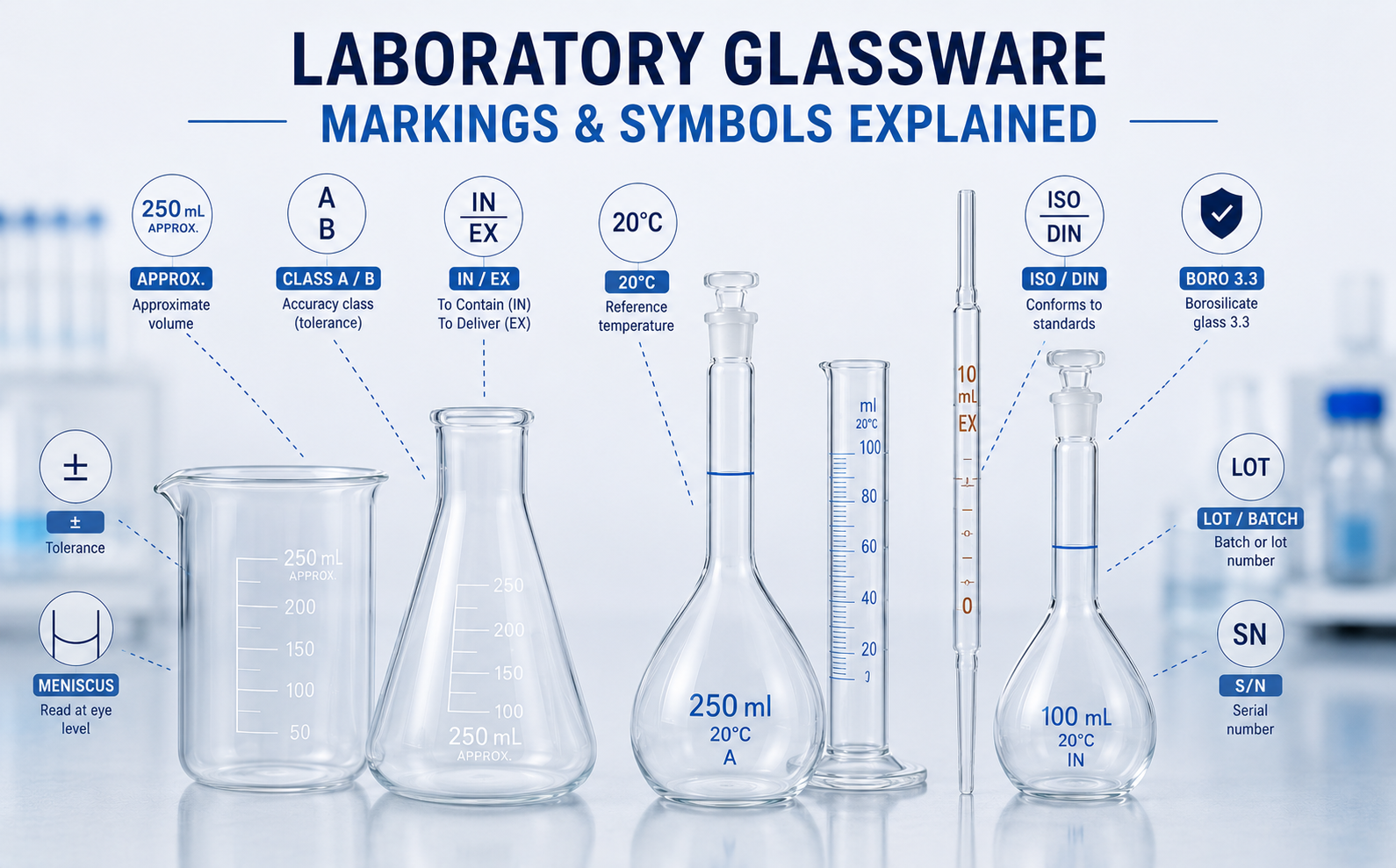
Volume values, tolerance information, Class A/AS/B markings, calibration temperature and graduation lines are essential for correct use.
Aggressive chemicals and abrasive cleaning may damage these markings. Printed and graduated surfaces should therefore be handled carefully during cleaning.
9. Inspect the Glassware After Cleaning
Cleaning provides an excellent opportunity to inspect the equipment.
Cracks, chips, damaged tips, illegible graduations or defective stopcocks may make volumetric glassware unsuitable for accurate laboratory work.
Conclusion
Proper cleaning of volumetric glassware contributes directly to measurement quality and reproducibility.
Using suitable cleaning agents, rinsing thoroughly, avoiding abrasive methods and protecting precision glassware from unnecessary thermal stress can help volumetric flasks, burettes and pipettes provide reliable service for longer.
A clean glass surface is one of the foundations of reliable volumetric measurement.