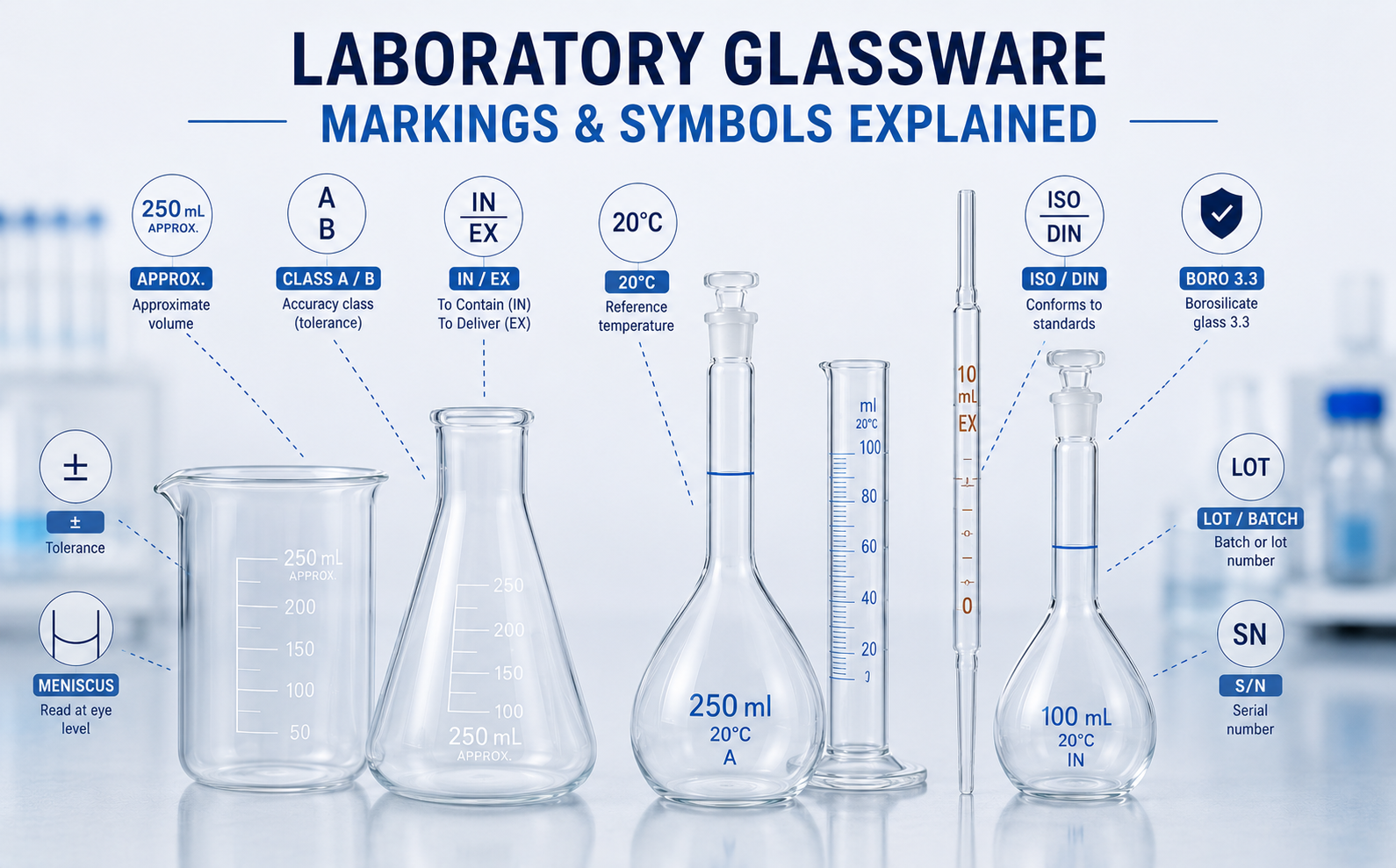
Reliable laboratory work depends not only on analytical methods and instruments but also on the ability to identify and track the materials used. Traceability allows a laboratory to connect a product with its origin, production batch, quality documentation and use history. A typical chain may look like: Manufacturer → Product → Product Code → Batch/Lot → Certificate → Distributor → Laboratory → Usage Record

1. Correct Product Identification
Products that look similar may have different grades, specifications or production lots.
Using information such as:
Product Name + Product Code + Grade + Lot Number
provides more reliable identification.
2. Connection to Production Records
A batch or lot number connects a product with a particular production group.
Depending on the manufacturer's quality system, it may be associated with manufacturing, raw-material, QC, packaging and distribution records.
3. CoA Verification
For products supplied with a Certificate of Analysis (CoA), the laboratory should verify that the certificate belongs to the product being used.
A fundamental check is:
Lot on product label = Lot on CoA
4. Quality Investigations
When a problem occurs, traceability can provide a path such as:
Affected product → Lot → Manufacturing records → QC results → Distribution
This helps determine the potential scope and origin of the problem.
5. Product Recalls
If a manufacturer identifies an issue with a particular lot, good traceability helps determine which products and customers may be affected.
This allows recalls to be managed more precisely.
6. Retrospective Investigation of Laboratory Results
If unexpected analytical results are discovered months later, lot records can help determine whether a reagent, filter, reference material or other consumable changed between tests.
This is particularly valuable in R&D, QC and validation work.
7. Complaint Management
Providing the product code, lot number, affected quantity and description of the problem allows manufacturers and distributors to investigate complaints more efficiently.
8. Inventory Management
Traceability can also support stock control by linking:
Lot + Receipt Date + Expiry Date + Opening Date + Quantity
For appropriate products, FEFO—First Expired, First Out—can help manage inventory.
9. Documentation and Audits
A good system can create a documented chain:
Test result → Reagent → Lot → CoA → Receipt record
This can be valuable for laboratories operating under formal quality systems.
10. Product Traceability vs Metrological Traceability
These concepts should not be confused.
Product traceability tracks a product's manufacturing, supply and usage history.
Metrological traceability relates a measurement result to an appropriate reference through a documented, unbroken calibration chain.
Both are important, but they serve different purposes.
What Should Be Recorded?
Depending on the product and application:
| Product | Useful Traceability Data |
|---|---|
| Chemicals | Product code, grade, lot, CoA, expiry |
| Reference materials | Lot, certificate, assigned value, validity |
| Volumetric glassware | Product code, batch, class, certificate |
| Filters | Lot, pore size, material |
| Sterile consumables | Lot, expiry, sterilization information |
| Instruments | Model, serial number, calibration/service history |
Barcode and QR Systems
Barcodes and QR codes can simplify traceability by connecting products to digital records containing lot, expiry, stock and certificate information.
However, the code itself is not the traceability system. The reliability of the underlying records is what matters.
Conclusion
True laboratory traceability connects:
Product identity + Batch/Lot + Certificates + Supply records + Quality records + Usage history
It allows laboratories to answer two fundamental questions:
“Where did this product come from?”
and
“Where was it used?”
Being able to answer these questions quickly and with documented evidence is an important element of professional laboratory quality management.