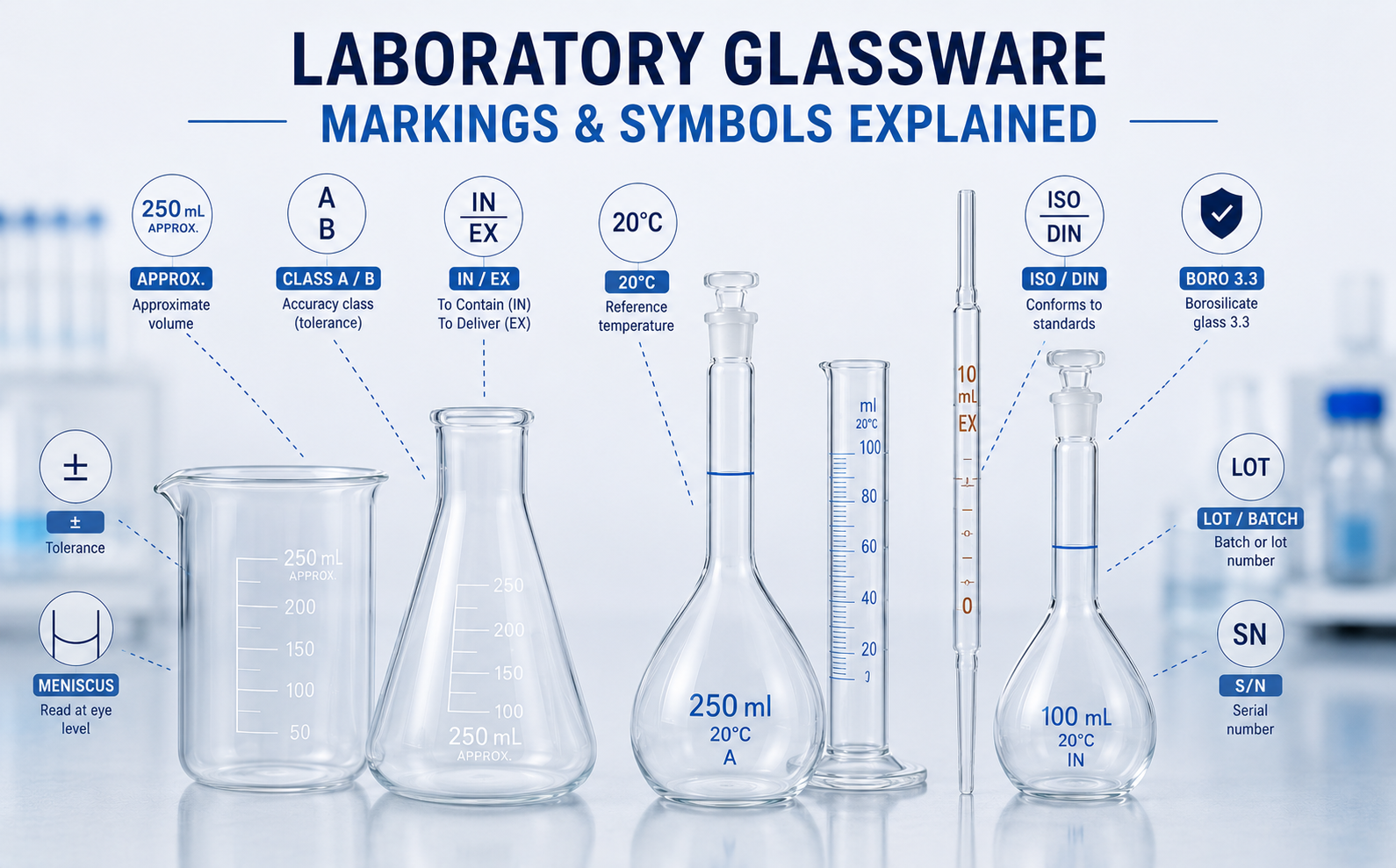
Proper laboratory results depend not only on high-quality instruments, chemicals and glassware, but also on the correct cleaning, rinsing and drying of laboratory glassware. Chemical residues remaining in beakers, Erlenmeyer flasks, volumetric flasks, pipettes, burettes and other glassware can contaminate subsequent samples and influence analytical results.

Why Is Proper Cleaning Important?
Even very small amounts of chemicals, oils, detergents or particles remaining on a glass surface may affect sensitive analyses.
Proper cleaning helps:
- Reduce cross-contamination.
- Support reproducible analytical results.
- Prevent residue build-up.
- Extend the useful life of glassware.
- Maintain reliability in precision measurements.
1. Clean Glassware Soon After Use
Whenever possible, laboratory glassware should be cleaned immediately after use.
Once chemical residues dry onto the surface, they can become considerably more difficult to remove. Salts, proteins, oils and certain organic compounds may require more intensive cleaning after prolonged contact.
2. Pre-Rinse the Glassware
Remove as much of the remaining material as possible before the main cleaning process.
Water may be sufficient for water-soluble residues, while suitable solvents may be necessary for certain organic substances.
Always consider chemical compatibility and laboratory safety procedures before selecting a rinsing agent.
3. Use an Appropriate Laboratory Detergent
Laboratory-grade cleaning agents are generally preferable to ordinary household detergents.
The cleaning agent should be compatible with the glassware, the contaminant and the intended analytical application.
Excess detergent does not necessarily improve cleaning and may leave unwanted residues. Follow the manufacturer's recommended concentration and contact time.
4. Use Mechanical Cleaning Carefully
Suitable laboratory brushes can be used for beakers, flasks and wide-neck bottles.
Avoid brushes or abrasive materials that may scratch the glass. Excessive mechanical force can damage the surface and potentially reduce the mechanical integrity of the glassware.
5. Rinse Thoroughly
After washing, detergent and chemical residues must be thoroughly removed.
For sensitive analytical applications, a final rinse with deionized or purified water is generally preferred to reduce deposits from minerals and dissolved ions.
A clean glass surface typically allows water to spread relatively evenly rather than forming isolated droplets on greasy areas.
6. Take Special Care with Volumetric Glassware
Volumetric flasks, volumetric pipettes and burettes require additional care because they are calibrated for precise volume measurements.
Unnecessary exposure to high temperatures should therefore be avoided. Routine drying of volumetric glassware in high-temperature ovens may not be appropriate.
Draining and air drying under suitable clean conditions is often preferable.
7. Dry Glassware Correctly
Clean glassware should be dried in an environment protected from dust and recontamination.
General-purpose glassware may be air dried or dried under appropriately controlled temperatures depending on its construction and intended use.
Allow heated glassware to return to an appropriate temperature before using it for precision volumetric measurements.
Common Cleaning Mistakes
Common mistakes include allowing residues to dry for extended periods, using abrasive cleaners, insufficient rinsing, leaving detergent residues and exposing calibrated volumetric glassware to unnecessary high temperatures.
Clean internal surfaces should also not be touched with bare hands.
How Can You Tell If Glassware Is Clean?
Visual inspection is the first step. The surface should be free from visible particles, stains, oily films and chemical residues.
For trace analysis, microbiology, pharmaceutical testing or other highly sensitive applications, visual cleanliness alone may not be sufficient. Validated laboratory cleaning procedures should be followed.
Conclusion
Correct glassware cleaning is more than a matter of appearance. It is an important part of analytical quality and reliability.
Selecting the correct cleaning agent, rinsing thoroughly, drying appropriately and handling volumetric glassware carefully help preserve glassware performance and support reliable laboratory results.