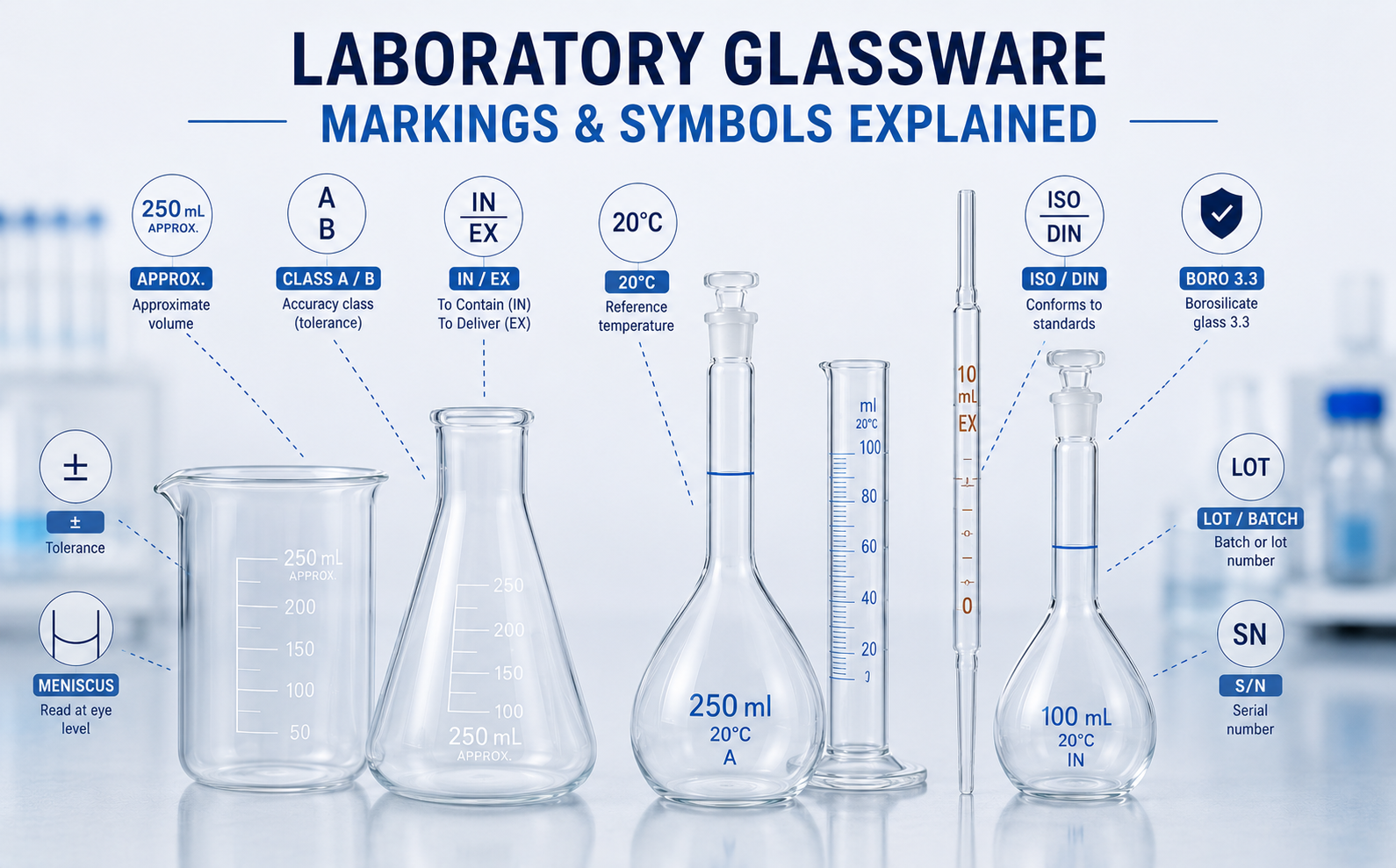
Sterilization of laboratory glassware is an important procedure in microbiology, biotechnology, chemistry, pharmaceutical and research laboratories. One of the most widely used methods is autoclaving, which uses saturated steam under pressure. Can beakers, Erlenmeyer flasks, laboratory bottles, flasks and other glassware be autoclaved? The short answer is: Many laboratory glass products made from suitable materials and designed for autoclave use can be autoclaved. However, not every glass product should automatically be considered autoclavable.

What Is Autoclaving?
An autoclave sterilizes materials using saturated steam under pressure. Operating cycles vary according to the load, material and sterilization requirements.
A commonly used sterilization cycle operates at approximately 121 °C, although other programs may use higher temperatures.
Glassware must therefore be suitable not only for elevated temperatures but also for the associated heating and cooling cycle and operating conditions.
Which Laboratory Glassware Can Be Autoclaved?
One of the most widely used materials for autoclavable laboratory glassware is borosilicate 3.3 glass.
Its low coefficient of thermal expansion helps reduce thermal stresses during temperature changes.
When specified as autoclavable by the manufacturer, common examples include:
- laboratory bottles,
- beakers,
- Erlenmeyer flasks,
- certain flasks and reaction vessels,
- glass tubes and culture tubes,
- selected glass storage containers.
The shape, wall thickness, closure system and physical condition of the product must also be considered.
Can All Glassware Be Autoclaved?
No.
Simply being made of glass does not make an item suitable for autoclaving.
Certain soda-lime glasses, decorative glass, damaged glassware or products not designed for elevated-temperature applications may not be suitable.
Always check the glass type and manufacturer's instructions.
Why Is Borosilicate 3.3 Advantageous?
Borosilicate 3.3 undergoes relatively small dimensional changes as its temperature changes.
Its low thermal expansion helps reduce thermal stresses during controlled heating and cooling.
However:
Borosilicate 3.3 does not mean unlimited resistance to every temperature, pressure or autoclave cycle.
The manufacturer's specified operating limits should always be followed.
How Should Laboratory Bottles with Caps Be Autoclaved?
Closed containers require particular attention.
If a bottle containing liquid or moisture is autoclaved with its cap tightly closed, pressure may build inside during heating.
For autoclavable screw-cap bottles, the cap generally needs to be loosened or an appropriate venting system used, according to the validated procedure and manufacturer's instructions.
Should Bottles Be Filled Completely?
Generally, no.
Liquids expand when heated, and boiling, foaming or overflow may occur during an autoclave cycle.
Adequate headspace should therefore be provided.
The appropriate amount depends on the liquid, container geometry and autoclave cycle.
Why Are Scratches and Microcracks Important?
Glassware should be inspected before autoclaving.
Cracks, deep scratches, chips and edge damage can reduce mechanical strength.
Temperature changes during an autoclave cycle may cause existing defects to propagate and potentially result in breakage.
Regular inspection is especially important for repeatedly autoclaved glassware.
Should Hot Glassware Be Cooled Rapidly?
No.
Placing hot glassware from an autoclave directly onto a cold surface or exposing it to cold water may increase the risk of thermal shock.
Allow glassware to cool in a controlled manner.
Are Caps and Accessories Also Autoclavable?
Not necessarily.
Even if the glass bottle itself is autoclavable, its cap, liner, seal or other accessories may have different temperature limitations.
The compatibility of all components should therefore be verified.
What Should Be Checked Before Autoclaving?
Confirm that the manufacturer identifies the product as suitable for autoclaving. Inspect it for cracks and scratches, select an appropriate validated cycle, prevent dangerous pressure buildup and provide sufficient headspace when processing liquids.
The laboratory's own SOPs and autoclave safety procedures should always be followed.
Does Autoclaving Affect Glassware Service Life?
Repeated use, cleaning, mechanical impacts and thermal cycling can contribute to surface damage over time.
Glassware that undergoes frequent autoclaving should therefore be inspected periodically.
Conclusion
Many laboratory glass products can be autoclaved, but being made of glass alone does not guarantee suitability.
Borosilicate 3.3 is widely used because its low thermal expansion provides good performance during temperature changes. Nevertheless, product design, condition, closures, accessories and manufacturer-specified operating limits must all be considered.
Selecting appropriate glassware, preventing pressure buildup, using the correct autoclave cycle and allowing controlled cooling are fundamental to safe autoclaving.