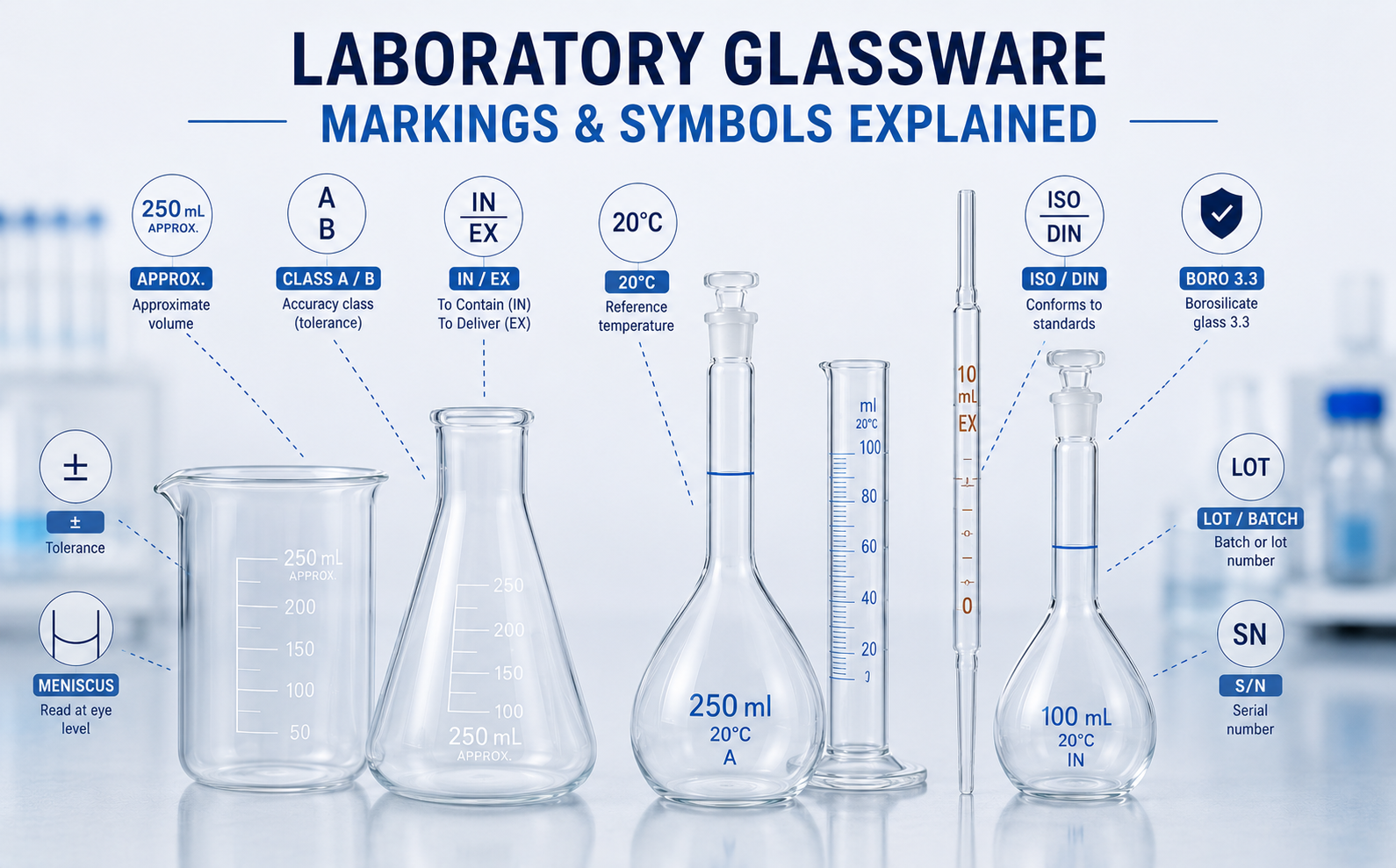
Laboratory glassware is essential for chemical analysis, sample preparation, titration, heating and many other laboratory procedures. High-quality glassware can provide years of reliable service, but its lifespan depends not only on material quality but also on proper handling, cleaning, storage and inspection. Here are 10 practical ways to extend the service life of laboratory glassware.
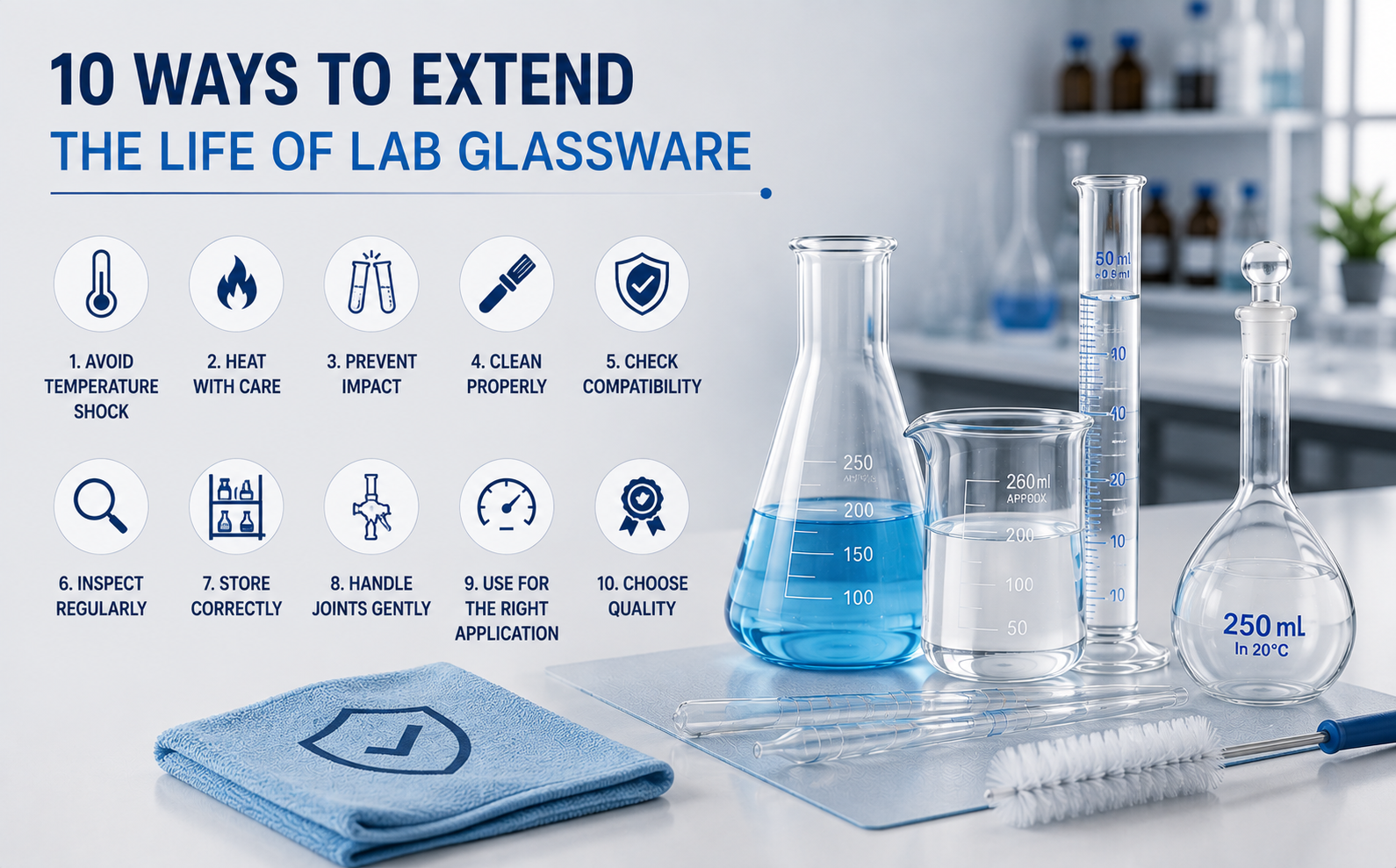
1. Avoid Sudden Temperature Changes
Rapid temperature changes can create thermal stress within glass.
Avoid placing hot glassware directly on cold surfaces or exposing cold glassware to sudden high temperatures. Even though borosilicate 3.3 glass offers excellent resistance to thermal change, gradual heating and cooling are preferable whenever possible.
2. Do Not Heat Every Type of Glassware
Not all laboratory glassware is designed for direct heating.
Volumetric flasks, burettes, pipettes and graduated cylinders are primarily designed for measurement rather than direct heating.
Always use glassware according to its intended application and the manufacturer's instructions.
3. Prevent Glass-to-Glass Impact
Contact between glass products can produce scratches, chips and microscopic surface damage.
Handle glassware carefully and provide sufficient separation during transportation and storage.
4. Use Appropriate Cleaning Methods
Avoid abrasive cleaners, metal brushes and tools that may scratch the glass surface.
Use suitable laboratory detergents and appropriate brushes, followed by thorough rinsing to remove cleaning residues.
5. Check Chemical Compatibility
Laboratory glass offers excellent resistance to many chemicals, but it is not completely inert under every chemical condition.
Consider the chemical, concentration, temperature and contact time before use, particularly when working with aggressive media.
6. Inspect for Scratches and Microcracks
Regularly inspect glassware, particularly after cleaning and before demanding applications.
Pay attention to rims, bases, necks, joints, stopcocks and glass surfaces.
Products with significant damage should not be used in demanding applications such as heating or vacuum work.
7. Store Glassware Correctly
Improper storage is a common cause of laboratory glassware damage.
Glass products should be stored securely without excessive contact or pressure. Dedicated racks or holders are particularly useful for long and fragile products such as pipettes and burettes.
8. Never Force Stuck Glass Joints
Ground-glass joints can occasionally become stuck.
Applying excessive force can cause sudden breakage and injury. Follow appropriate laboratory procedures for releasing stuck joints rather than forcing them apart.
9. Use Suitable Glassware for Vacuum and Pressure
Not all laboratory glassware is designed for vacuum or pressure applications.
Use only products specifically suitable for the intended operating conditions and inspect them carefully for damage before use.
10. Use Each Product for Its Intended Purpose
Beakers, Erlenmeyer flasks, volumetric flasks, graduated cylinders, pipettes and burettes are designed for different applications.
Selecting the correct product improves not only its service life but also measurement reliability and laboratory safety.
Conclusion
Extending the life of laboratory glassware begins with proper handling.
Controlled temperature changes, appropriate cleaning, safe storage, regular inspection and correct product selection can significantly contribute to maintaining glassware performance.
Care for your glassware correctly to protect safety, performance and service life.