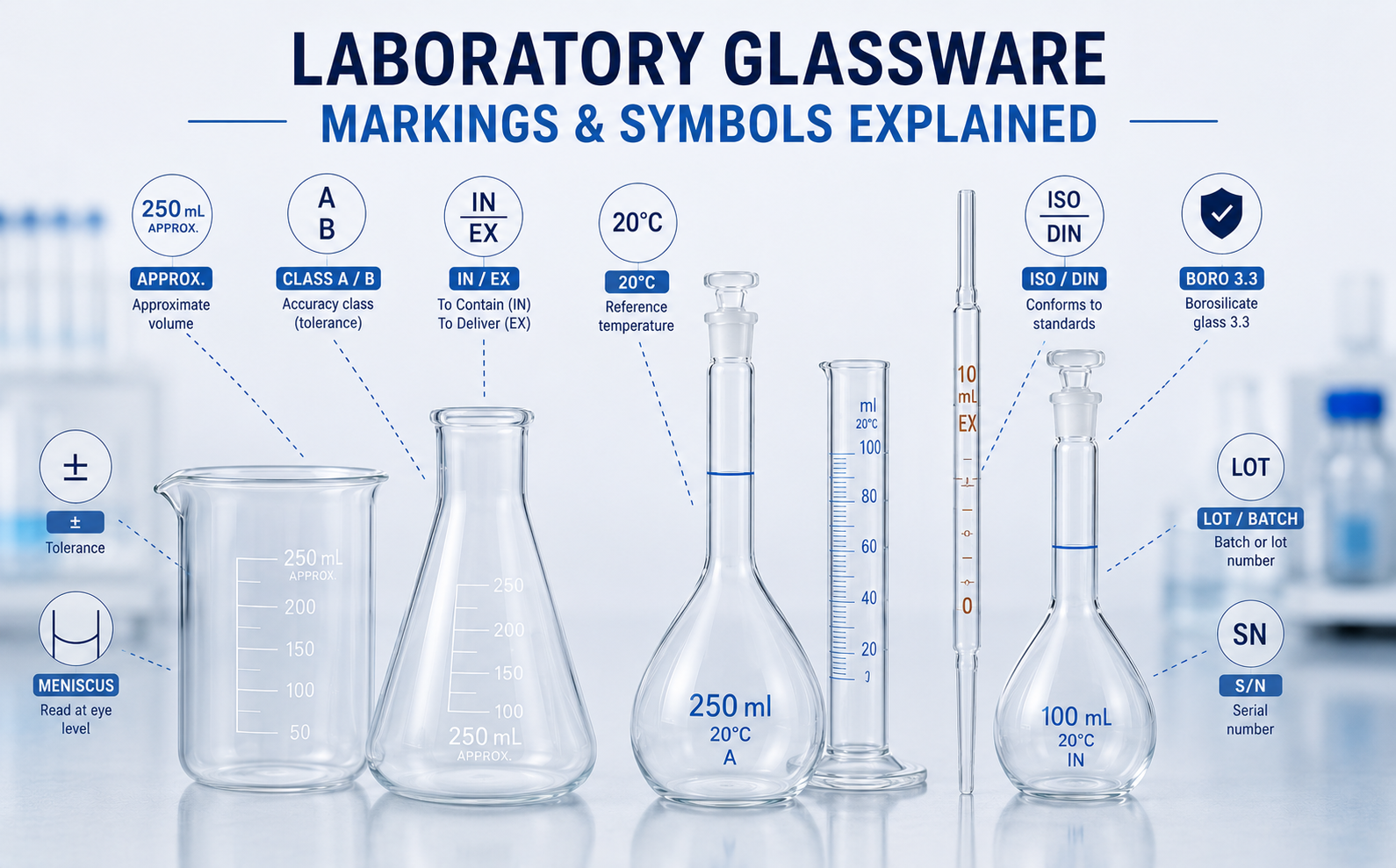
Proper cleaning of laboratory glassware is essential not only for hygiene, but also for analytical accuracy, reproducibility and the service life of the glassware. Oils, grease, dried chemical solutions, metal salts and organic substances can be particularly difficult to remove with ordinary water and detergent. A stronger cleaning method, however, is not automatically a better one. The method should always be selected according to the type of residue and the characteristics of the glassware.
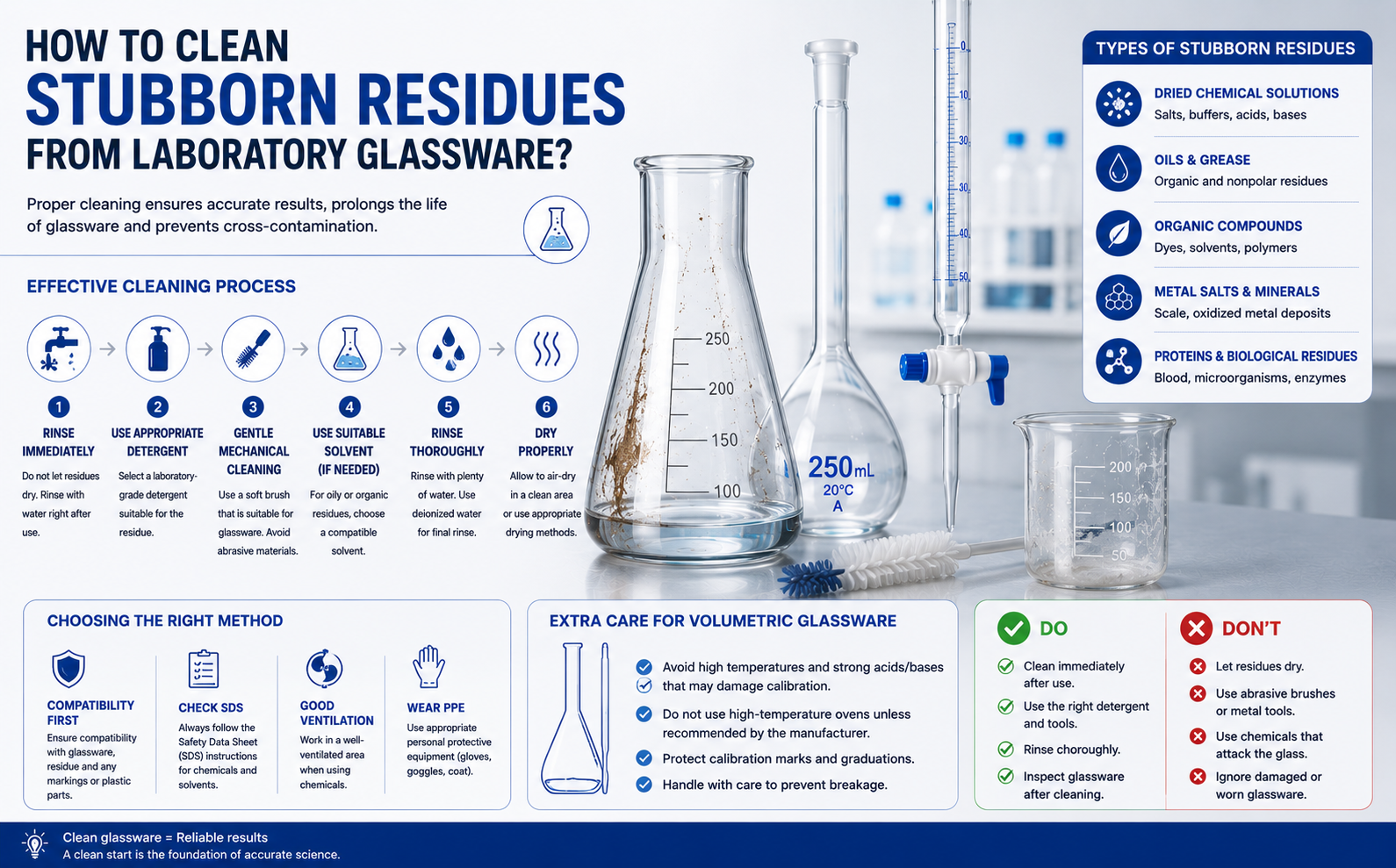
1. Identify the Residue First
Before cleaning, determine the type of contamination whenever possible. Water-soluble salts, oils, organic compounds, dried solutions, mineral deposits, dyes and biological residues may require different approaches.
If the residue is unknown, avoid randomly applying aggressive chemicals. Follow established laboratory cleaning procedures and chemical safety requirements.
2. Do Not Allow Residues to Dry
One of the easiest ways to prevent stubborn contamination is to rinse glassware immediately after use.
Once chemical solutions dry on the surface, they can become considerably more difficult to remove. Prompt pre-rinsing can therefore simplify subsequent cleaning.
3. Use a Suitable Laboratory Detergent
For many residues, water combined with an appropriate laboratory detergent should be the first cleaning option.
Follow the manufacturer's recommended concentration and contact time. Excess detergent does not necessarily improve cleaning and may leave residues if the glassware is not thoroughly rinsed.
4. Choose Solvents Carefully for Oils and Organic Residues
Grease, oils and certain organic substances may require a compatible solvent.
Chemical compatibility is essential. The solvent should not damage the glassware, printed markings, plastic components, seals or stopcocks. Always follow the handling, ventilation and personal protective equipment requirements specified in the relevant Safety Data Sheet (SDS).
5. Mineral and Inorganic Deposits
Some mineral deposits and metal salts cannot be completely removed with conventional detergents. Appropriate chemical cleaning methods may be used according to approved laboratory procedures.
Cleaning with strong acids or bases should only be performed under appropriate risk assessment, training and laboratory safety procedures.
6. Avoid Abrasive Cleaning
Metal tools, abrasive pads and hard brushes can scratch glass surfaces and cause microscopic damage.
Use soft laboratory brushes suitable for glassware instead. Special care should be taken with volumetric glassware to protect calibration lines and printed markings.
7. Rinse Thoroughly
Cleaning chemicals left on glassware can themselves become a source of contamination.
After cleaning, rinse thoroughly with water of appropriate quality. For sensitive analytical work, deionized or purified water may be preferred for the final rinse.
A clean glass surface should generally be wetted evenly by water. Persistent droplets or greasy areas may indicate remaining contamination.
8. Take Extra Care with Volumetric Glassware
Calibrated items such as volumetric flasks, burettes and volumetric pipettes require particular care.
Avoid unnecessarily aggressive cleaning methods and excessive temperatures. Calibration marks, graduations and glass surfaces should be protected, and the manufacturer's cleaning and handling recommendations should be followed.
Inspection After Cleaning
Before reuse, inspect the glassware for stains, particles, detergent residues and oily areas. Also check for cracks, scratches, chipped edges and other physical damage.
Conclusion
There is no single cleaning method suitable for every stubborn laboratory residue. Correct identification of the contamination, selection of an appropriate cleaning agent, avoidance of abrasive treatment and thorough rinsing are the foundations of effective glassware cleaning.
Proper cleaning helps extend the service life of laboratory glassware while reducing contamination and supporting more reliable laboratory results.