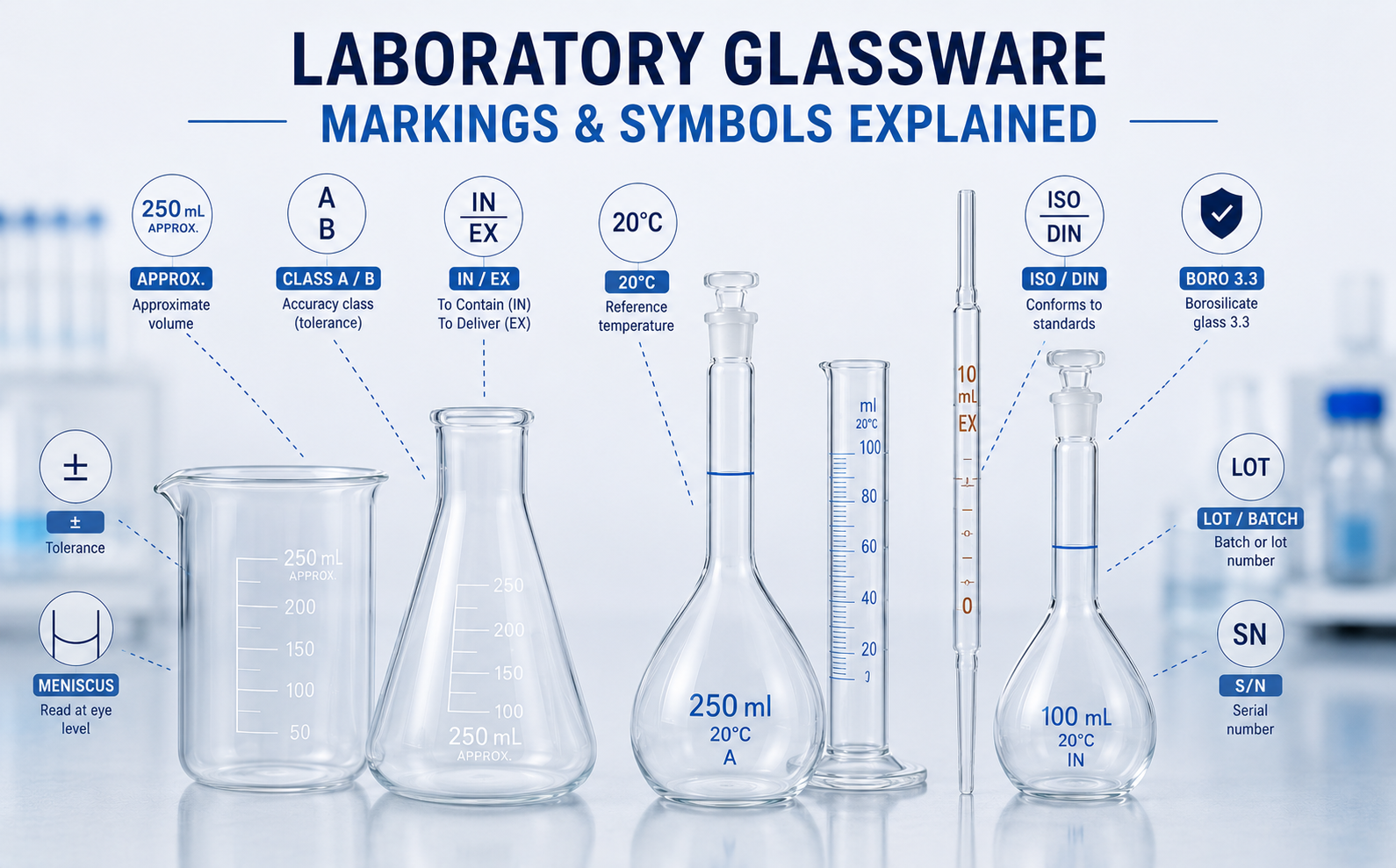
Proper cleaning of laboratory glassware is important, but correct drying and storage are equally essential. Residual moisture, chemical residues and inappropriate storage conditions can affect subsequent laboratory work and may shorten the service life of glassware.

1. Rinse Thoroughly Before Drying
Proper drying begins with proper rinsing.
After cleaning, detergent and chemical residues should be removed. Depending on the application, purified, deionized or distilled water may be appropriate for the final rinse.
2. Allow Glassware to Air-Dry Properly
For many routine applications, clean glassware can be allowed to air-dry in a clean, controlled environment.
Use an appropriate drying rack that allows water to drain effectively. Narrow-neck vessels should be positioned so that water droplets do not remain trapped inside.
3. Keep Drying Racks Clean
Placing freshly cleaned glassware on a dirty or dusty rack can recontaminate it.
Drying areas should therefore be kept clean and protected from dust, oils and chemical splashes.
4. Is Oven Drying Suitable for All Glassware?
Some heat-resistant laboratory glassware can be oven-dried at controlled temperatures. However, high-temperature drying is not appropriate for every type of glassware.
Unnecessary heating should be avoided for precision volumetric glassware such as volumetric flasks, pipettes and burettes. Manufacturer instructions should always be considered.
Temperature-sensitive plastic components, caps and stopcocks must also be taken into account.
5. Avoid Rapid Cooling
Hot glassware removed from an oven should not be subjected to sudden temperature changes.
Placing hot glass directly onto a very cold surface can create thermal stress. Controlled cooling is particularly important for large or thick-walled glassware.
6. Use Compressed Air Carefully
Air or suitable gas may sometimes be used to accelerate drying.
The air supply should be free from oil, particles, excessive moisture and other contaminants. For sensitive analytical applications, the drying method itself must not introduce contamination.
7. Do Not Store Glassware While Wet
Glassware should be thoroughly dried before long-term storage.
Residual moisture can contribute to staining or contamination, particularly in closed containers.
Bottles should generally not be sealed for extended storage while moisture remains inside.
8. Store Glassware Securely
Beakers and flasks should be stored on stable shelving, while long and fragile items such as pipettes and burettes benefit from dedicated racks or holders.
Avoid arrangements where glassware can fall or strike adjacent items.
9. Avoid Unnecessary Stacking
Nesting glassware tightly inside other glassware can cause scratches, sticking or breakage.
Saving storage space should never compromise the physical integrity of laboratory glassware.
10. Protect Against Dust and Contamination
Clean glassware that will not be used immediately should be protected from dust and laboratory aerosols.
Clean, closed cabinets are often suitable for routine storage. More sensitive applications may require storage procedures defined by the laboratory's contamination-control system.
11. Protect Ground-Glass Joints
Ground-glass surfaces should be protected from impacts during storage.
Avoid storage conditions that may damage the joint surfaces or cause components to become stuck together.
12. Inspect Before Reuse
Even properly stored glassware should receive a quick visual inspection before use.
Check for dust, stains, residues, scratches, cracks and chipped edges.
Special Considerations for Volumetric Glassware
Volumetric flasks, pipettes and burettes are precision measuring instruments calibrated under defined conditions.
Drying and storage procedures should therefore protect not only cleanliness but also measurement integrity and calibration characteristics.
Conclusion
Correct drying and storage help reduce contamination risks, protect laboratory glassware and support reliable laboratory work.
Thorough rinsing, appropriate drying, controlled temperatures, clean storage and careful handling should all form part of good glassware management.
Clean, properly dried and safely stored glassware supports accurate and reliable laboratory work.