One of the most common questions when selecting laboratory supplies is whether to use single-use or reusable products. There is no universal answer. Sample characteristics, contamination risk, sterility requirements, chemical compatibility, cleaning and validation procedures, cost and waste management should all be considered. The right choice can directly influence analytical reliability, laboratory safety and operational efficiency.

What Are Single-Use Laboratory Products?
Single-use products are generally designed to be discarded after one procedure or defined use cycle.
Common examples include pipette tips, centrifuge tubes, Petri dishes, sample containers, syringe filters, membrane filters, certain plastic pipettes and gloves.
A major advantage is their ability to help reduce cross-contamination between samples when used correctly.
Advantages of Single-Use Products
They can reduce cross-contamination, eliminate many cleaning steps, save time and simplify standardized workflows.
Sterile versions are also widely available for microbiology, cell culture and biological applications.
However:
Single-use does not automatically mean sterile, contamination-free or suitable for every analytical application.
The product specifications must still be checked.
Reusable Laboratory Products
Reusable products are designed to be used repeatedly after appropriate cleaning, maintenance and, when required, sterilization.
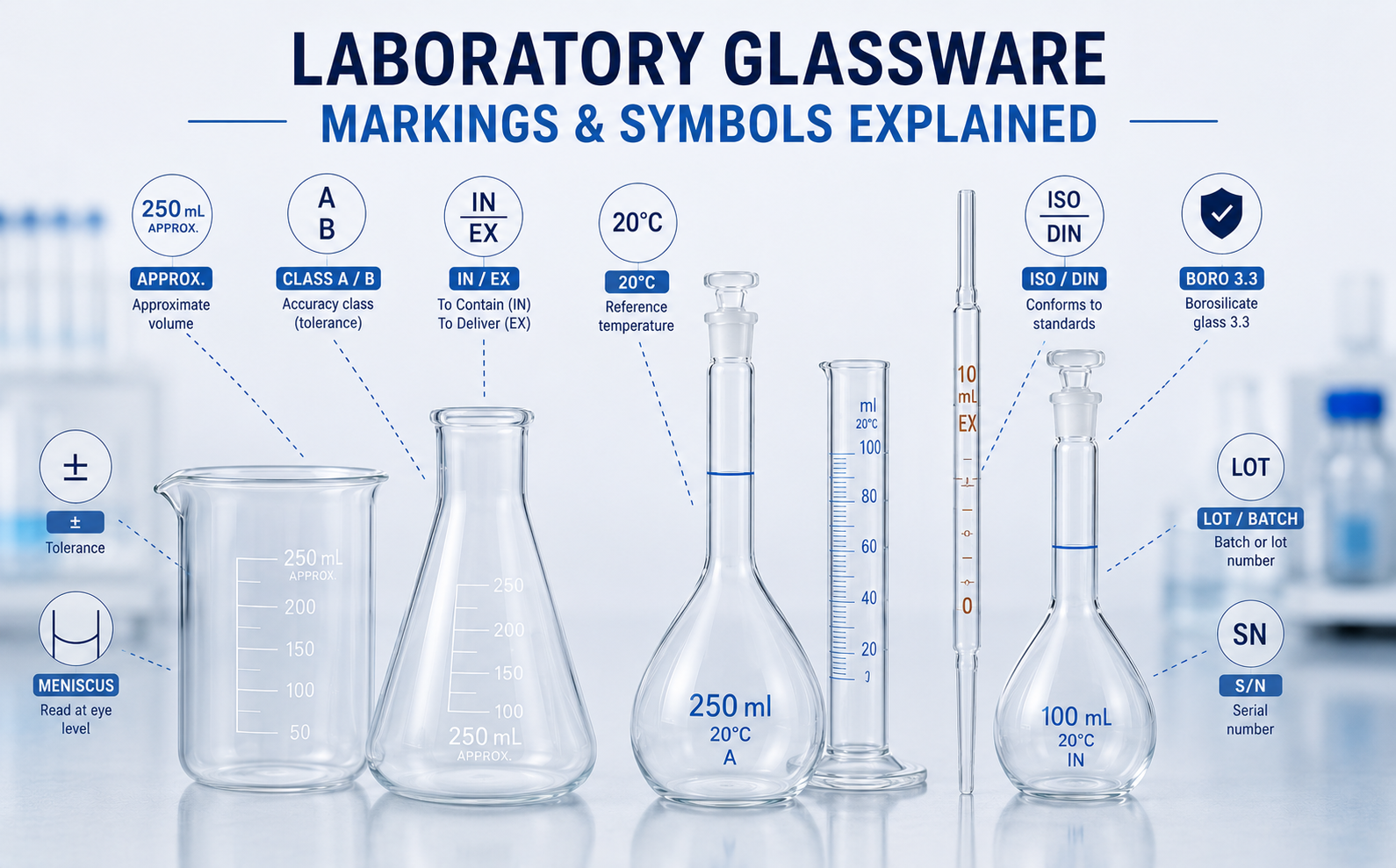
Common examples include beakers, Erlenmeyer flasks, graduated cylinders, burettes, volumetric pipettes, volumetric flasks, glass bottles, separatory funnels and glass filtration systems.
High-quality borosilicate glass 3.3 is particularly suitable for repeated use in many laboratory applications because of its chemical and thermal properties.
Advantages of Reusable Products
A well-maintained reusable product can be used through many working cycles, potentially reducing long-term purchasing costs.
Reusable products may also reduce single-use waste and, depending on the material, provide excellent chemical and thermal resistance.
However, cleaning, drying, inspection, maintenance and sometimes sterilization must be included in the workflow.
Which Is Better for Contamination Control?
It depends on the application.
Single-use products can significantly reduce the risk of carrying residues from previous samples. However, potential leachables and analyte adsorption from disposable materials may need to be considered in sensitive applications.
For reusable products, insufficient cleaning and residues from previous samples are important risks.
The best option therefore depends on the analytical requirements.
Single-Use Does Not Mean Sterile
An important distinction is:
Single-use ≠ Sterile
If sterility is required, the product must specifically be supplied and documented as sterile.
Similarly, reusable equipment that can be appropriately sterilized may also be suitable for sterile applications.
Looking Beyond Purchase Price
The true cost of reusable products may include:
Purchase + cleaning + water + detergent + energy + labor + sterilization + breakage
For disposable products, consider:
Purchase + storage + use + waste collection + disposal
A total cost per use comparison therefore provides a more meaningful assessment.
Environmental Considerations
Single-use plastics can increase laboratory waste. However, reusable products also require water, energy and cleaning chemicals.
Environmental impact therefore depends on the complete use cycle rather than waste volume alone.
Which Should You Choose?
| Application / Requirement | Often preferred |
|---|---|
| High cross-contamination risk | Single-use |
| Routine sterile applications | Sterile single-use |
| Microbiology / cell culture | Often single-use, depending on procedure |
| Routine volumetric measurements | Calibrated reusable glassware |
| Titration | Reusable burettes |
| Chemical reactions | Compatible reusable glassware is often suitable |
| High-throughput sample processing | Single-use consumables |
| Long-term routine laboratory work | Reusable products may be advantageous |
| Sensitive trace analysis | Application-specific assessment required |
A Hybrid Approach
For many modern laboratories, the best solution is a combination of both.
Beakers, Erlenmeyer flasks, burettes and volumetric flasks may be reusable, while pipette tips, filters and contamination-critical sample consumables may be single-use.
This approach can balance contamination control, cost, performance and sustainability.
Conclusion
The question is not simply “single-use or reusable?”
The better question is:
“Which option is most appropriate for this particular laboratory application?”
Contamination risk, sterility, chemical compatibility, cleanability, analytical sensitivity, total cost and waste management should all be considered before making the final choice.