Vacuum filtration is widely used in laboratories to accelerate filtration, collect precipitates and separate solid and liquid phases efficiently. Because the system operates under reduced pressure, chemical compatibility alone is not enough when choosing glassware. Mechanical strength, glass quality, connection design, equipment compatibility and safe operating conditions must also be considered. Using unsuitable glassware can result in leaks, poor filtration performance, cracking or even implosion under vacuum.

Main Components of a Vacuum Filtration System
A typical setup may include:
- Filter funnel or filter holder
- Vacuum-rated filtration flask
- Appropriate gasket or adapter
- Vacuum tubing
- Vacuum source
- Filter paper or membrane
The glass components exposed to vacuum, especially the filtration flask, must be selected for the intended application.
1. Use Glassware Designed for Vacuum
Not every laboratory bottle or Erlenmeyer flask is suitable for vacuum use.
Vacuum filtration flasks are generally designed with thicker walls and greater mechanical strength than ordinary Erlenmeyer flasks. The manufacturer should specifically indicate suitability for vacuum applications.
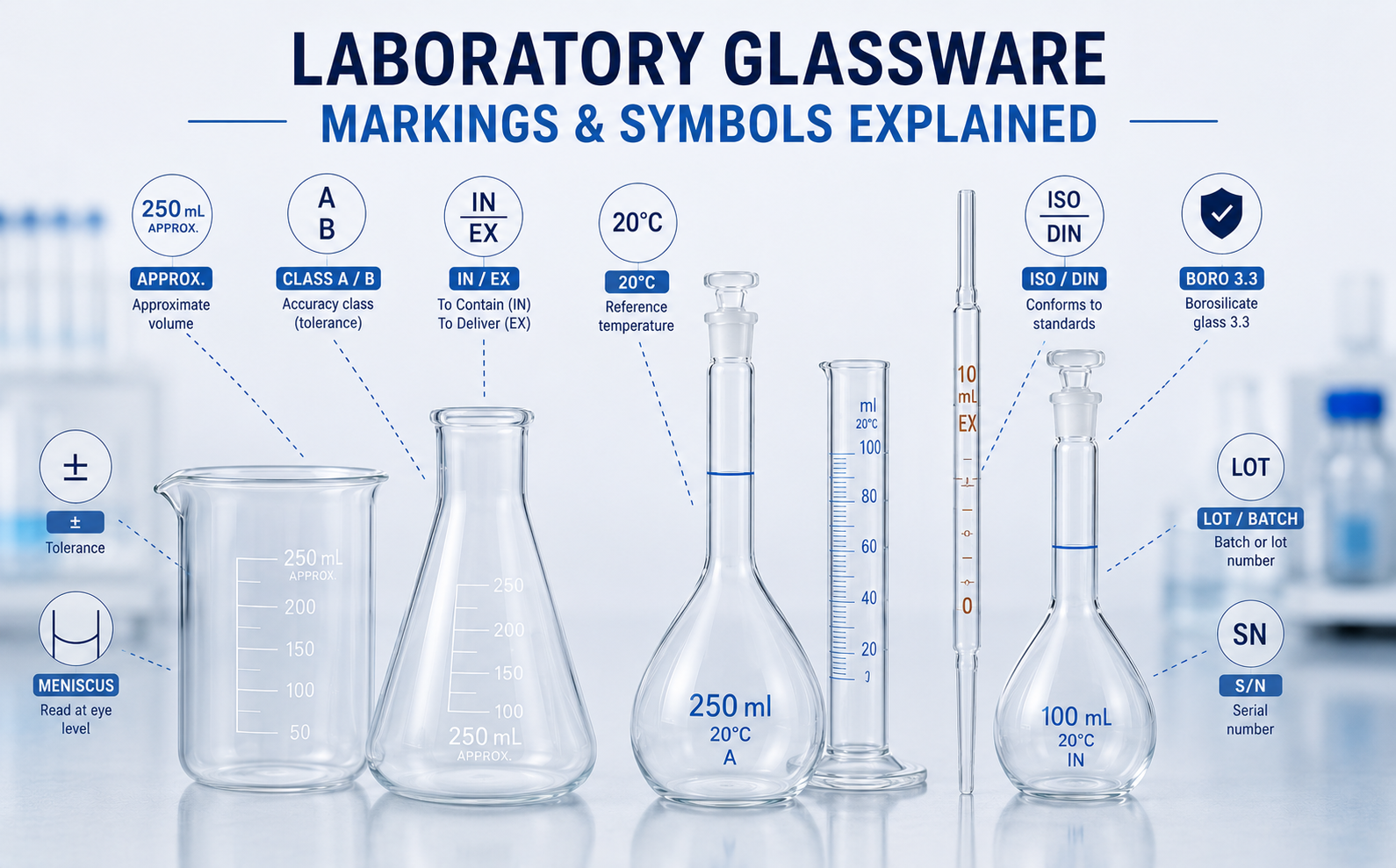
Borosilicate 3.3 glass alone does not automatically mean that a product is vacuum-rated. Product geometry and wall thickness are also important.
2. Advantages of Borosilicate 3.3 Glass
Borosilicate 3.3 glass is commonly used in vacuum filtration equipment because of its low thermal expansion and high chemical resistance.
Key advantages include:
- High resistance to many chemicals
- Low thermal expansion
- Good transparency
- Compatibility with common laboratory cleaning procedures
- Reliable performance in many routine filtration applications
However, material quality must always be considered together with mechanical design.
3. Select the Correct Flask Capacity
The filtration flask should have a capacity greater than the expected filtrate volume.
Avoid filling the flask completely. Adequate headspace helps reduce the risk of liquid entering the vacuum line and supports more controlled operation.
For extended filtrations, the liquid level should be monitored regularly.
4. Side Arm and Tubing Connection
The side arm of a vacuum flask is the connection point for vacuum tubing.
Make sure that:
- the side arm is free from cracks,
- the tubing has the correct diameter,
- the connection is not forced,
- the tubing does not place mechanical stress on the glass.
Forcing stiff or undersized tubing onto the side arm can cause breakage.
5. Funnel and Adapter Compatibility
When using a Büchner funnel, filtration funnel or membrane holder, the connection between the funnel and flask should be airtight.
Use a correctly sized rubber adapter, gasket or connector.
An unsuitable adapter can cause:
- air leaks,
- reduced vacuum,
- slower filtration,
- unstable flow.
Avoid applying excessive force to create a seal.
6. Inspect for Cracks and Scratches
Even small defects can be important in glassware used under vacuum.
Before use, inspect the flask and other glass components for:
- cracks,
- star cracks,
- deep scratches,
- impact marks,
- edge damage.
Damaged glassware should not be used under vacuum.
7. Avoid Sudden Temperature Changes
Although borosilicate glass offers good thermal resistance, sudden temperature changes can generate mechanical stress.
Placing hot glassware on a cold surface or adding hot liquid to cold glass may increase the risk of damage.
Remember that vacuum systems can experience both thermal and mechanical stress simultaneously.
8. Check Chemical Compatibility
The filtrate or solvent should be compatible not only with the glass but also with the tubing, seals, filter and adapters.
Evaluate the complete fluid-contact path:
Glass + tubing + gasket + filter + adapter
For aggressive chemicals, always consult the manufacturer's compatibility data.
9. Apply Vacuum Gradually
Vacuum should be applied in a controlled manner rather than suddenly.
After assembling the system, check the connections before starting the vacuum. When filtration is complete, safely release the vacuum before disconnecting any components.
Avoid moving or stressing glassware while it is under vacuum.
Conclusion
Choosing glassware for vacuum filtration involves much more than selecting the correct volume.
Vacuum-rated design + borosilicate 3.3 glass + correct capacity + sound side arm + proper adapter + undamaged glass + chemical compatibility form the basis of reliable vacuum filtration.
Properly selected and regularly inspected equipment supports safer and more efficient laboratory work.