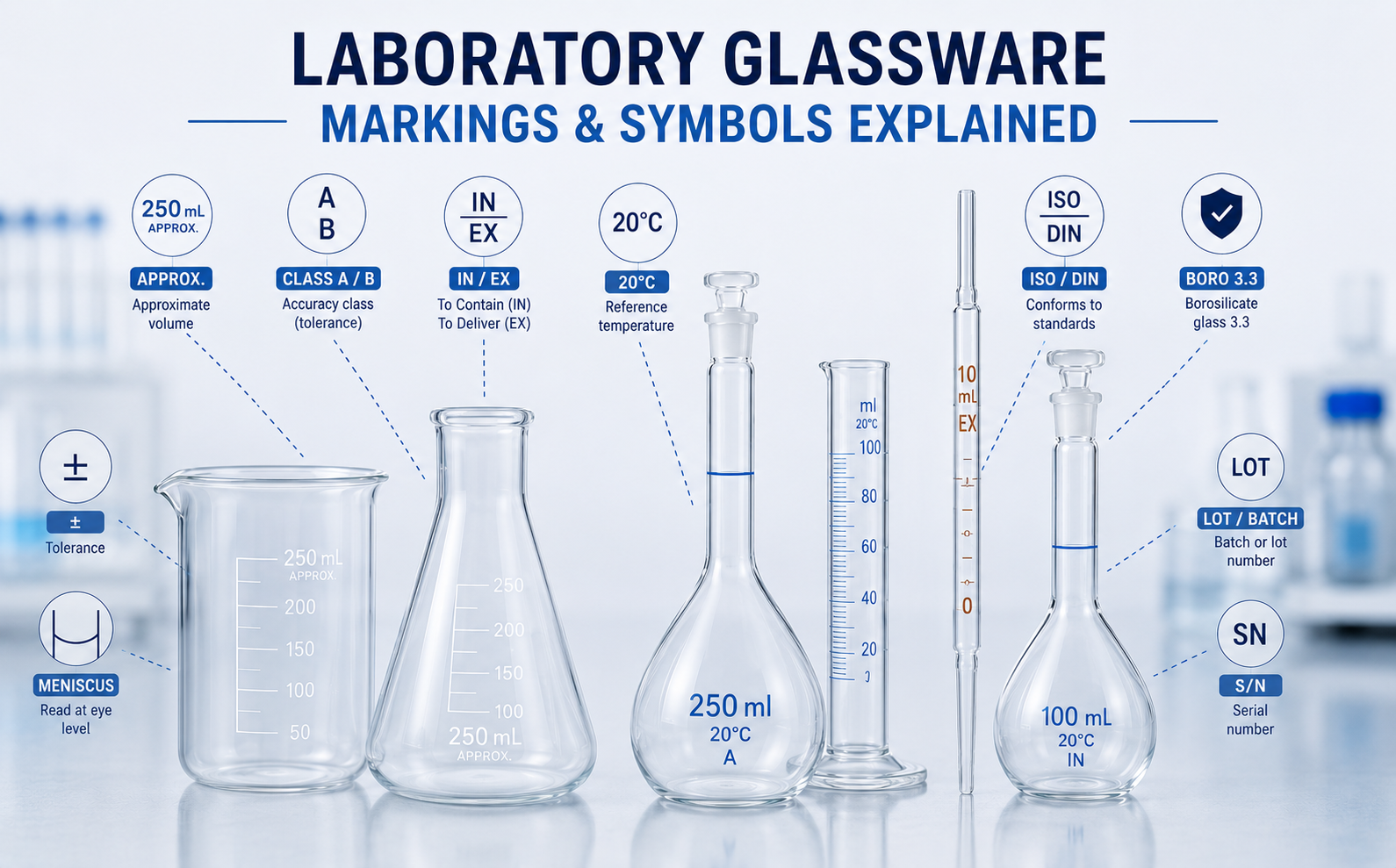
Laboratory glassware may appear intact while developing scratches, small defects or microcracks through repeated use, cleaning, handling or temperature changes. These seemingly minor defects can reduce mechanical strength and increase the risk of failure, particularly during heating, vacuum applications or other demanding conditions. For this reason, laboratory glassware should not only be clean; it should also be in good physical condition.

1. Why Are Scratches Important?
Glass is hard but sensitive to surface defects.
A scratch can act as a stress concentration point. When the glass is subjected to mechanical or thermal stress, this area may become a potential starting point for crack propagation.
A defect that appears visually minor can therefore be significant for the mechanical integrity of the product.
2. What Is a Microcrack?
Microcracks are very small cracks located at or close to the glass surface.
They may not always be easily visible to the naked eye. Repeated use, mechanical stress and thermal cycling can contribute to their growth.
This makes inspection particularly important for glassware that is regularly heated and cooled.
3. Why Does It Matter During Heating?
Glass expands when heated and contracts when cooled.
Borosilicate 3.3 glass has low thermal expansion and is therefore well suited to many laboratory applications involving temperature changes. However, this does not mean damaged borosilicate glassware is immune to failure.
Existing scratches or cracks can become areas where stress is concentrated during heating.
4. Rapid Temperature Changes Can Increase Risk
Placing hot glassware on a cold surface or rapidly heating cold glass can create temperature differences within the material.
These differences generate thermal stress.
Previously damaged glassware may tolerate less stress than intact glassware, making its physical condition an important consideration.
5. Why Is Damage Particularly Important Under Vacuum?
Mechanical integrity is critical for glassware used under vacuum.
The pressure difference between the inside and outside of the vessel creates mechanical loading. Cracks, deep scratches or structural defects can increase risk under these conditions.
Only undamaged glassware specifically suitable for the intended vacuum application should be used.
Not all laboratory glassware is designed for vacuum service.
6. What Causes Scratches?
Common causes include glass-to-glass contact, metal tools, abrasive cleaning materials, improper stacking, impacts during transportation and contact with hard laboratory surfaces.
Careful handling, cleaning and storage can help reduce unnecessary surface damage.
7. Check Rims and Edges Too
Inspection should not focus only on the main body.
Chips and cracks around rims, bases, necks and connection points can also affect safe handling and mechanical integrity.
Damaged edges may additionally present a cutting hazard.
8. Should Damaged Glassware Continue to Be Used?
Glassware with visible cracks, chips, severe scratches or structural damage should not continue to be used in critical applications.
This is particularly important when the product will be heated, subjected to vacuum or pressure, or used with hazardous chemicals.
Questionable glassware should be evaluated and removed from service according to the laboratory's safety procedures.
9. Why Is Regular Inspection Important?
Routine visual inspection can help identify damage before a product is used in a demanding application.
Inspection under good lighting, particularly after cleaning and before critical procedures, can reveal cracks, chips and significant surface damage.
Conclusion
A small scratch on laboratory glassware may be more than a cosmetic defect.
Surface damage can create stress concentration points that affect mechanical strength, particularly during heating, thermal cycling, vacuum and other demanding applications.
Selecting suitable glassware, handling it correctly and removing damaged products from service are therefore important elements of laboratory safety.
Intact glassware is an essential part of a safe laboratory.