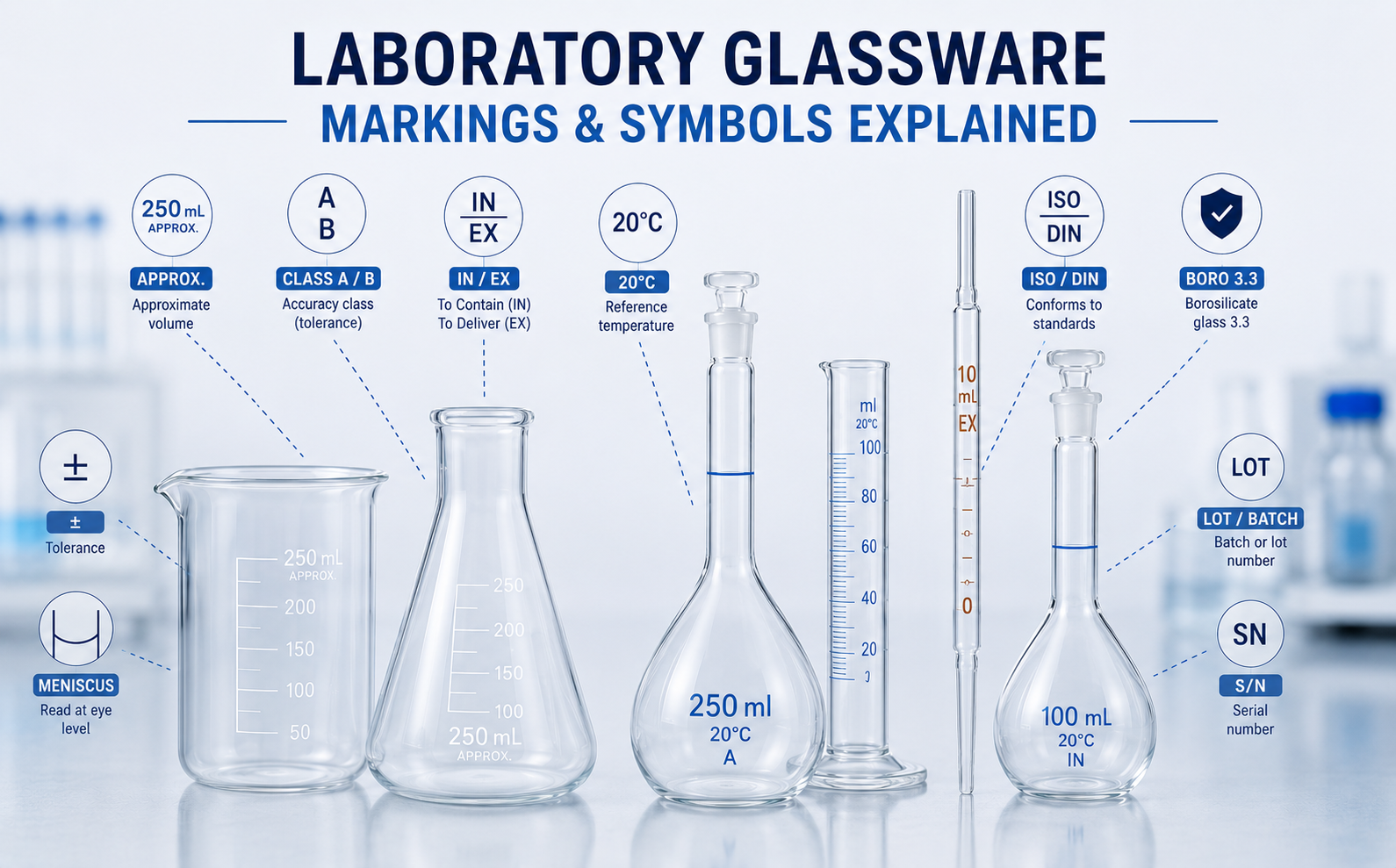
Price is naturally an important factor when purchasing laboratory glassware. However, the lowest purchase price does not necessarily mean the lowest overall cost. Glass composition, manufacturing quality, wall uniformity, chemical and thermal resistance, calibration accuracy and service life should all be considered.

1. Not All Laboratory Glass Is the Same
Two beakers may look almost identical while being made from glass with different technical properties.
Borosilicate 3.3 is widely used in professional laboratories because of its low thermal expansion, high hydrolytic resistance and good resistance to many chemicals.
Therefore, the glass type should be checked before comparing prices.
2. Breakage Can Make a Cheap Product Expensive
The real cost of glassware includes more than its purchase price:
Purchase price + replacement + breakage + downtime
A higher-quality product that remains usable for longer may ultimately cost less than a cheaper product requiring frequent replacement.
3. Wall Thickness and Uniformity Matter
Professional laboratory glassware should have an appropriate and reasonably uniform wall structure.
Uneven walls can contribute to localized mechanical and thermal stresses.
However, thicker does not automatically mean better. Correct design and uniformity are more important than thickness alone.
4. Thermal Performance Matters
Glassware used for heating and cooling must tolerate temperature changes appropriately.
Borosilicate 3.3 offers an important advantage because of its low coefficient of thermal expansion.
Even so, unnecessary rapid temperature changes should always be avoided.
5. Chemical Resistance Affects Service Life
Laboratory glassware may be exposed to acids, bases, solvents and many other reagents.
Good chemical and hydrolytic resistance helps preserve the glass surface over time.
Chemical compatibility must still be considered individually, particularly for substances such as hydrofluoric acid and strong alkalis.
6. Accuracy Matters More Than Price for Volumetric Glassware
For burettes, pipettes, volumetric flasks and graduated cylinders, measurement accuracy is a critical factor.
Where required, products with defined tolerance classes such as Class A or AS may be appropriate for precise laboratory work.
7. Manufacturing Quality Matters
Rims, pouring spouts, bases, joints, stopcocks and graduations should be properly manufactured.
Small manufacturing details can make a significant difference in everyday laboratory use.
8. Durable Markings Are Important
Graduations and markings should remain clearly readable throughout normal use.
Poor-quality markings that fade quickly can reduce the usability of graduated and volumetric glassware.
9. Standards Make Comparison Easier
Compliance with relevant ISO, DIN or other applicable standards can help buyers compare products based on technical criteria rather than appearance alone.
This is particularly important for calibrated glassware.
10. Consider the Total Cost of Ownership
A better purchasing approach is to consider:
Total Cost = Purchase + Replacement + Breakage + Downtime + Quality Risk
The cheapest product at the time of purchase may therefore not be the most economical product over its service life.
Conclusion
When buying laboratory glassware, price should be considered together with glass type, chemical resistance, thermal performance, manufacturing quality, calibration, markings and applicable standards.
The right question is not simply:
“How much does it cost?”
but rather:
“What value will this product provide throughout its useful life?”