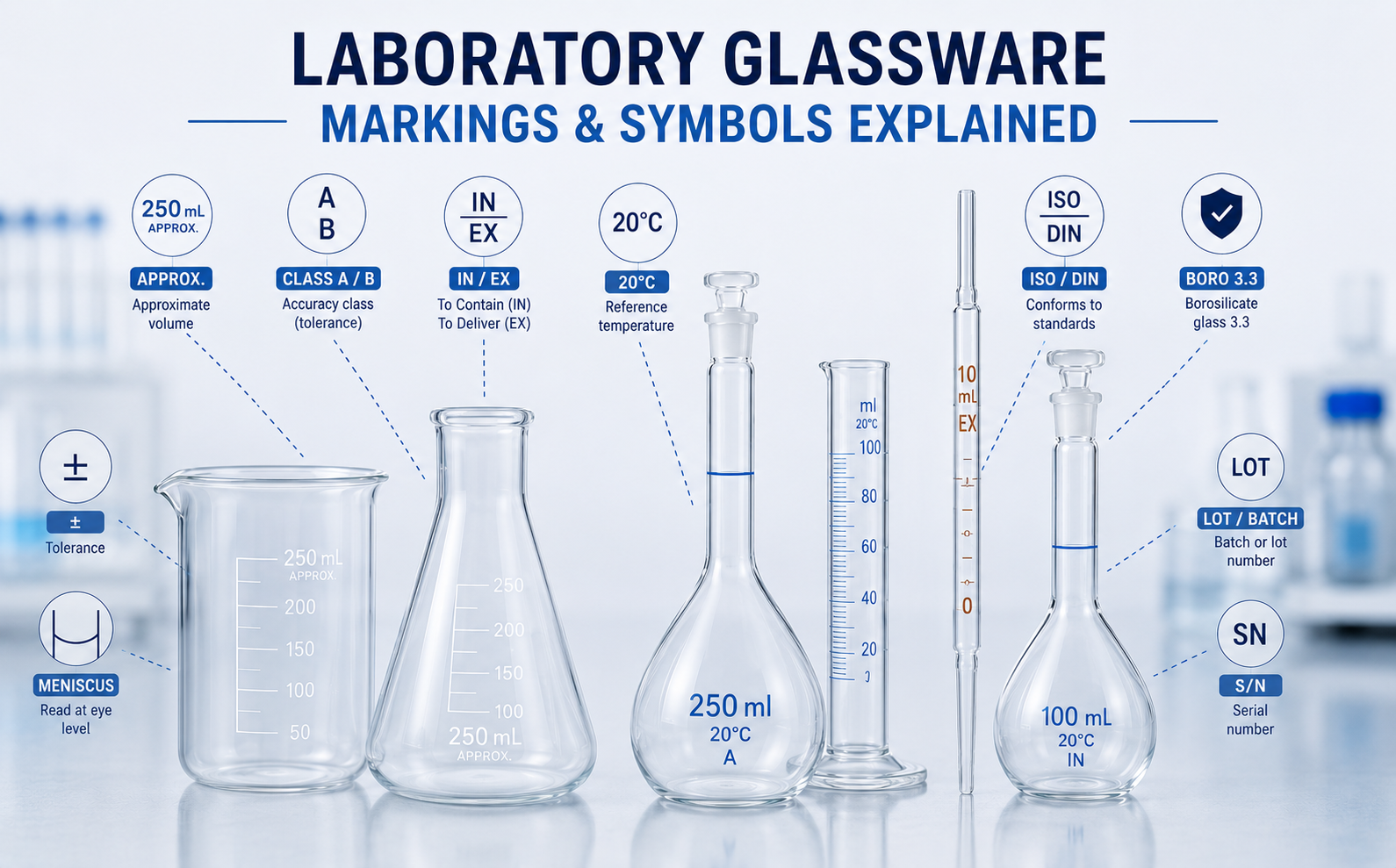
Laboratory glassware may be designed to withstand elevated temperatures, but this does not mean it is completely resistant to sudden temperature changes. Placing a hot beaker, flask or other glass vessel directly onto a cold surface, or exposing it to cold water, can create internal stresses within the glass. This phenomenon is known as thermal shock, and it may cause cracking, microcracks or sudden breakage.

What Is Thermal Shock?
Glass expands when heated and contracts when cooled.
When the entire object cools gradually and relatively uniformly, this dimensional change can occur in a controlled manner. Problems arise when one part of the glass cools much faster than another.
The rapidly cooling section attempts to contract while hotter sections remain expanded.
This difference creates mechanical stress within the glass. If the stress exceeds the material's strength, cracking or breakage may occur.
Isn't Borosilicate Glass Resistant to Thermal Shock?
Borosilicate 3.3 glass has a low coefficient of thermal expansion and therefore offers better resistance to temperature changes than conventional soda-lime glass.
This is one reason why it is widely used for laboratory beakers, Erlenmeyer flasks and other heat-resistant glassware.
However, thermal-shock resistance does not mean thermal-shock immunity.
Extreme or rapid temperature changes can still damage borosilicate glass, particularly when scratches or microcracks are already present.
Why Is a Cold Laboratory Bench a Problem?
When recently heated glassware is placed directly onto a cold metal, stone or ceramic surface, the bottom of the vessel may cool much faster than the upper sections.
This uneven cooling creates temperature differences within the glass and can generate stress, particularly around the base and wall transitions.
Allowing hot glassware to cool gradually on an appropriate dry, heat-resistant surface is generally safer.
What About Cooling Hot Glass with Cold Water?
Pouring cold water onto hot glassware or immersing hot glass in cold water can produce severe thermal shock.
The outer surface cools rapidly while the interior may remain hot.
The risk can become particularly significant with large or thick-walled glassware.
Why Do Size and Wall Thickness Matter?
Thermal-shock resistance depends on more than just the type of glass.
Factors such as wall thickness, geometry, volume, temperature distribution and surface condition can influence performance.
Thicker glass may develop greater temperature differences between its inner and outer surfaces during rapid heating or cooling.
Scratches and Microcracks Increase the Risk
Small scratches, chipped edges and microcracks can act as stress concentration points.
Glassware that appears usable under normal conditions may fail at one of these weak points when exposed to significant thermal stress.
Heat-resistant laboratory glassware should therefore be visually inspected before use.
Avoid Wet and Very Cold Surfaces
Placing hot glassware on a wet bench can also create localized cooling.
Water beneath the glass may cool certain areas rapidly and unevenly. Very cold metal surfaces can produce a similar effect.
How Should Hot Laboratory Glassware Be Cooled?
The fundamental principle is simple: avoid abrupt temperature changes.
Place hot glassware on an appropriate dry, heat-resistant surface and allow it to cool gradually whenever possible.
Always observe the manufacturer's specified operating temperatures and thermal-shock recommendations.
Remember that hot glass may look exactly like cold glass.
Can Thermal Shock Also Occur During Heating?
Yes.
Thermal shock is not limited to cooling. Rapid or uneven heating of cold glassware can also generate damaging internal stresses.
Both heating and cooling should therefore be controlled.
Conclusion
Rapidly cooling laboratory glassware may seem convenient, but sudden temperature changes can create significant thermal stresses.
Even highly thermal-resistant borosilicate 3.3 glass has practical limits.
Controlled heating, gradual cooling and regular inspection of glassware are essential practices for reducing breakage risks and extending the service life of laboratory glassware.