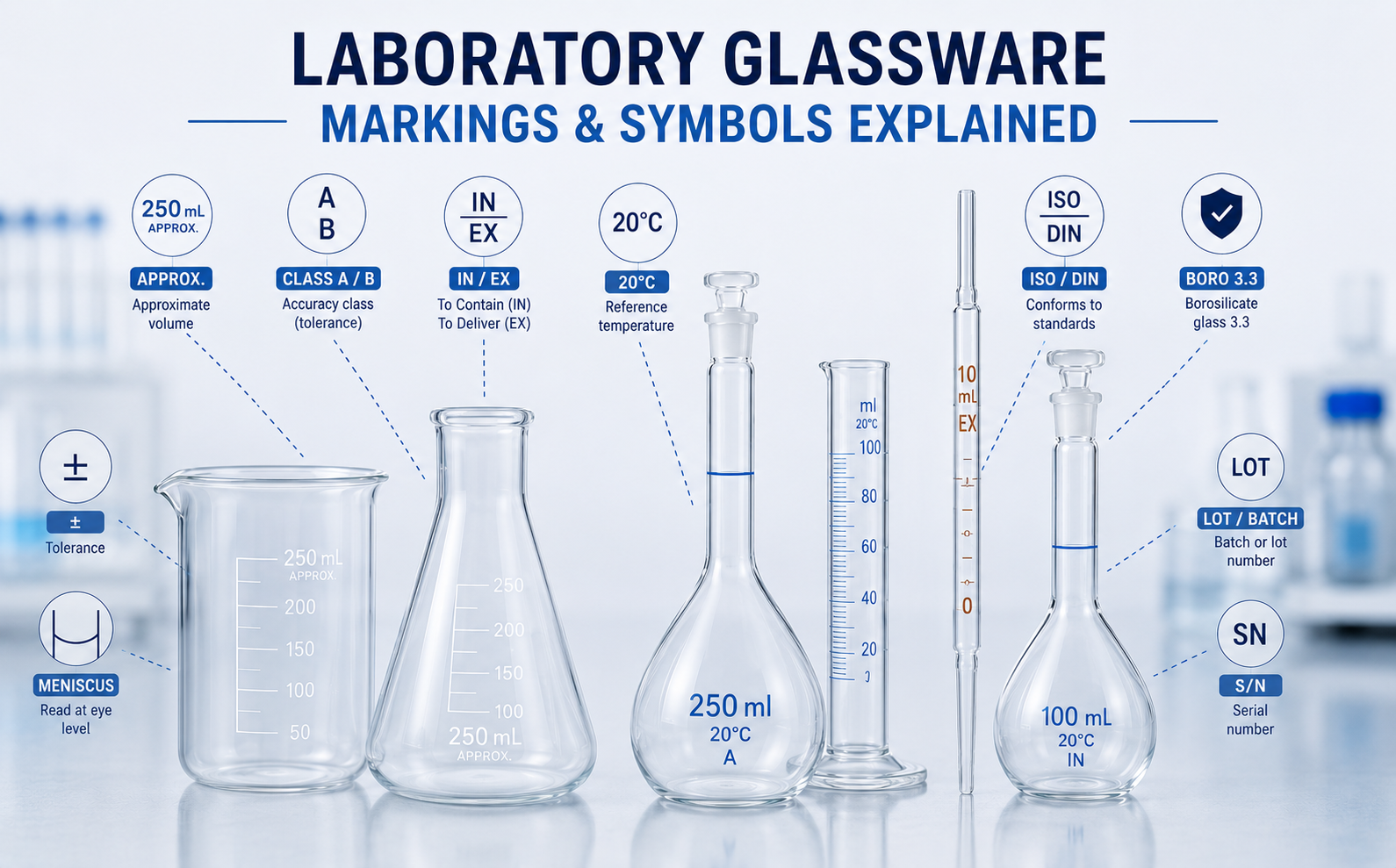
How every batch of Borox glassware is tested for thermal shock, volumetric accuracy and chemical resistance.

Every BOROX Glassware Batch Undergoes Thermal Shock, Volumetric Accuracy and Chemical Resistance Testing
In laboratory glassware, quality cannot be evaluated by appearance alone. Reliable laboratory glassware must withstand temperature changes, provide accurate and repeatable results when used for measurement, and maintain its structural properties when exposed to chemicals.
At BOROX®, batch-based testing and verification processes are at the core of our quality control approach. Glassware batches are inspected for thermal shock resistance, volumetric accuracy and chemical resistance, according to the product type and intended application.
1. Thermal Shock Testing: Confidence Against Sudden Temperature Changes
Laboratory glassware may be exposed to heating, cooling and contact with liquids at different temperatures during everyday use.
The purpose of thermal shock testing is to evaluate the behavior of glass under defined temperature changes. Products are subjected to controlled temperature variations and inspected for cracking, breakage or structural deformation.
Particularly in laboratory products manufactured from borosilicate 3.3 glass, the low coefficient of thermal expansion plays an important role in providing high resistance to temperature changes.
These inspections help verify the reliable performance of beakers, Erlenmeyer flasks, round-bottom flasks and other laboratory glassware that may be exposed to heat.
2. Volumetric Accuracy Testing: Reliability in Measurement
In laboratory work, even a few drops or a small difference in volume can affect analytical results. Accuracy is therefore critical for volumetric glassware such as burettes, pipettes, volumetric flasks and graduated cylinders.
As part of BOROX batch inspections, the deviation between nominal and actual volume is evaluated for volumetric glassware.
Depending on the product class and applicable tolerance values, the following parameters are checked:
Nominal volume
Volume tolerance
Accuracy of graduations and markings
Position of the calibration mark
Volumetric performance according to delivery or containment calibration
For high-accuracy products such as Class A and Class AS glassware, verification of tolerances is particularly important for obtaining reliable results in titration and quantitative analysis.
3. Chemical Resistance Testing: Suitability for Laboratory Conditions
Laboratory glassware may regularly come into contact with acids, bases, salt solutions, solvents and various reagents. Insufficient chemical resistance may cause the glass surface to deteriorate over time, potentially affecting both product lifetime and sensitive analytical procedures.
Chemical resistance inspections of BOROX glassware are designed to evaluate the performance of the glass surface and structure against chemical exposure that may occur under laboratory conditions.
The high hydrolytic and chemical resistance of borosilicate glass is one of the key reasons why it is widely used in modern laboratories.
Why Batch-Based Quality Control?
The successful testing of a single sample does not necessarily mean that an entire production run will deliver the same performance. Quality control must therefore remain an integral part of the production process.
Through BOROX's batch-based quality control approach, we aim to maintain consistent quality between production batches, identify potential deviations and verify compliance with defined technical criteria.
Our approach focuses on three fundamental areas:
Durability: Suitability of the glassware for its intended operating conditions.
Accuracy: Ability of volumetric products to measure within specified tolerances.
Chemical Resistance: Ability of the glass to maintain its performance when exposed to chemicals commonly encountered in laboratory environments.
Quality Starts Before the Product Reaches the Laboratory
Laboratory glassware is more than simply a glass container. Some products serve as reaction vessels, others form part of measurement systems, while others are themselves essential measuring instruments in quantitative analysis.
For BOROX®, quality control therefore does not begin when the product reaches the user. It is a process that starts during production.
From thermal resistance and volumetric accuracy to chemical resistance, visual inspection and functional controls, our objective is clear:
To provide laboratory glassware with consistent and verifiable quality that laboratories can use with confidence.
BOROX® — Reliable Quality in Laboratory Glassware
BOROX laboratory glassware is developed with the requirements of research, education, quality control and industrial laboratories in mind.
Every batch is inspected. Every measurement matters. Every detail defines quality.