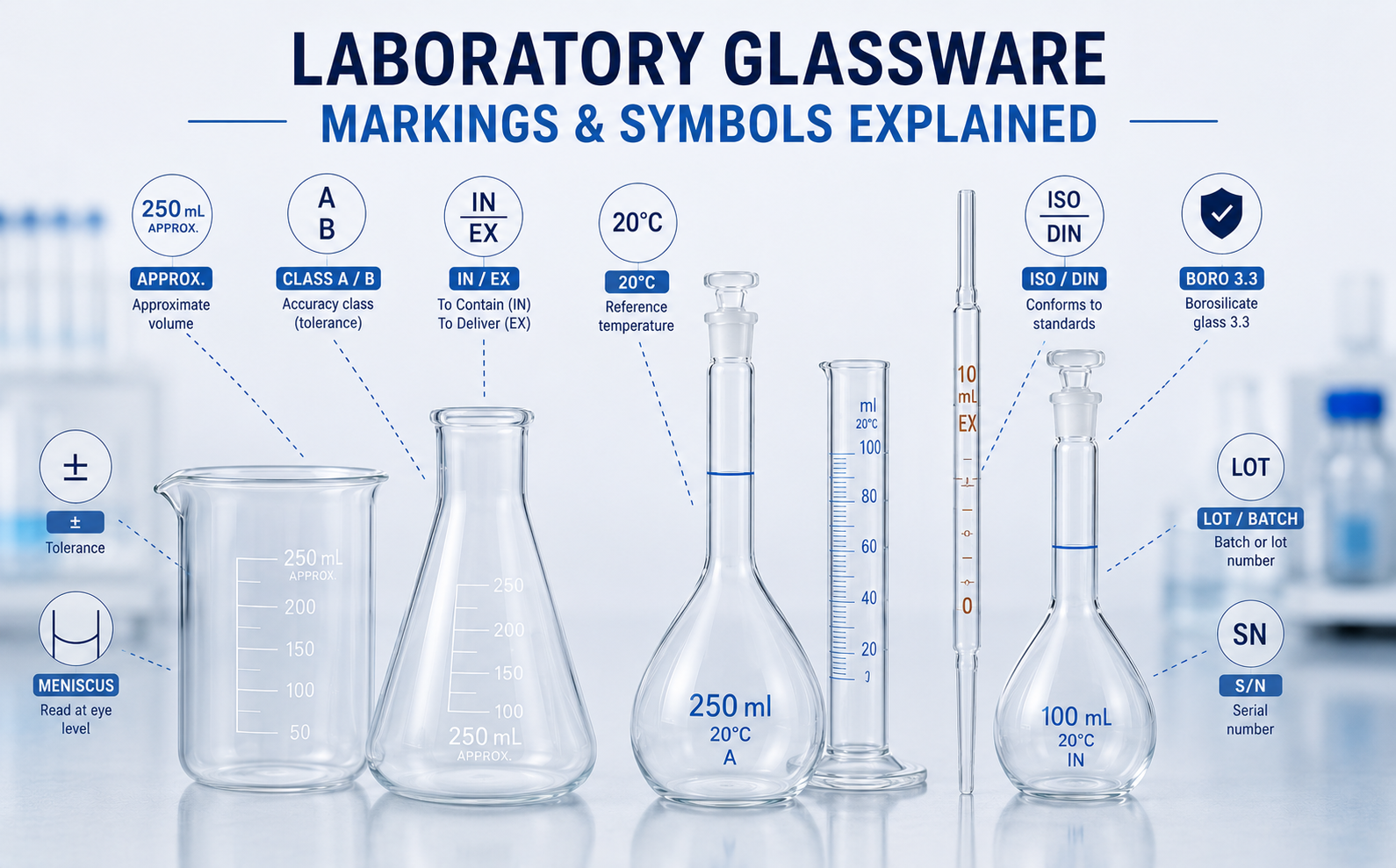
A Batch Number or Lot Number may appear to be a simple code printed on a product label, but it plays an essential role in laboratory product traceability and quality management. It connects a physical product with its production and quality-control records.

What Is a Batch / Lot Number?
A batch generally refers to a defined quantity of product manufactured under specified production conditions.
A lot number is an identifier associated with a particular production group for traceability.
In practice, the terms Batch Number and Lot Number are often used similarly, although exact definitions may vary between industries and quality systems.
1. Product Traceability
A lot number can help determine:
- when a product was manufactured,
- which production group it belonged to,
- which raw materials were used,
- which quality controls were performed,
- where the affected products were distributed.
It therefore creates a link between the physical product and manufacturing records.
2. Connection to Quality-Control Results
Quality-control tests can be associated with a specific production lot.
For laboratory chemicals, these may include assay, purity, pH, density, water content and impurities.
For laboratory products, dimensional, visual, volumetric or other relevant tests may be performed.
3. Linking the Product to Its CoA
For products supplied with a Certificate of Analysis (CoA), one of the most important checks is:
Lot number on label = Lot number on CoA
If the numbers do not match, the applicability of the certificate to that product should be investigated.
4. Investigation of Quality Problems
If unexpected breakage, deformation, contamination or an out-of-specification result occurs, the lot number allows the manufacturer to investigate the relevant production records.
The investigation can follow:
Product → Lot → Manufacturing records → QC records
5. Product Recalls
If a problem affects a specific production lot, the manufacturer may be able to identify and recall the affected products rather than unrelated production batches.
This makes lot traceability an important part of effective recall management.
6. Comparison Between Production Lots
Different lots of the same product may show small differences while still meeting the same specification.
Recording lot numbers helps laboratories investigate whether changes in experimental results could be related to a particular production batch.
7. Reliable Laboratory Records
Recording reagent or consumable lot numbers can improve experimental traceability, particularly in QC, pharmaceutical, food, R&D and accredited laboratories.
8. Complaint Management
When reporting a product complaint, providing the:
Product Code + Lot Number + Affected Quantity
can help the supplier or manufacturer investigate much more efficiently.
Lot Number vs Expiry Date
They are different.
Lot Number: Identifies a production group.
Expiry Date: Indicates the manufacturer's defined expiry date under specified storage conditions.
A lot number should not automatically be interpreted as a manufacturing date unless the manufacturer's coding system confirms this.
Lot Number vs Serial Number
| Identifier | Identifies |
|---|---|
| Lot / Batch No. | Production group |
| Serial No. | Individual item/device |
| Product Code | Product type/model |
| Expiry Date | Expiration information |
In simple terms:
Lot = Group identity
Serial Number = Individual identity
Is a Lot Number a Guarantee of Quality?
No.
A lot number is primarily a traceability tool, not proof that a product is high quality.
Specifications, test results, applicable standards, certificates and the manufacturer's quality system must also be considered.
Conclusion
A Batch / Lot Number creates an important traceability chain:
Product → Production batch → Quality control → Certificate → Distribution records
For laboratories, this supports CoA verification, complaint investigations, recalls, quality management and reliable documentation.
A lot number should therefore not be considered merely a small code on the label—it is a fundamental component of professional product traceability.